Bringing back an ancient, elegant form of small-game hunting
by John Dowd
For many, hunting requires a rifle, a shotgun, a bow and maybe some ammunition and some arrows if you actually want to get something. But for Natalie Sullivan it just takes trust and a bird of prey.
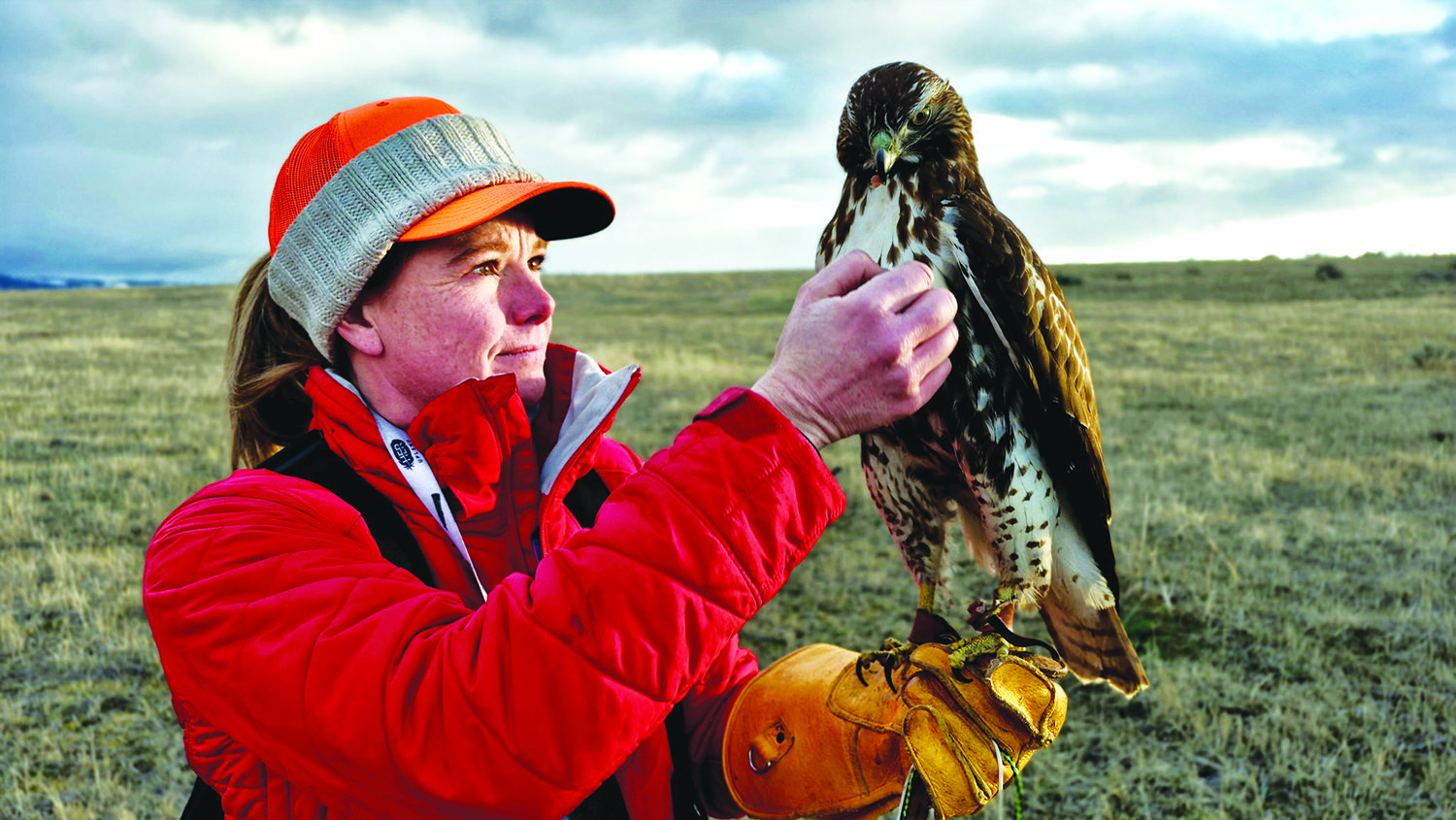
Originally from Stevensville, Sullivan has recently started practicing falconry near Missoula and in the Bitterroot Valley. The process has taken her years of working toward the opportunity to hunt alongside a hawk. The ancient practice, which pairs a trained bird of prey with a human hunting partner, offers a different approach to pursuing small game and a chance to build a working relationship with a wild animal. That was something Sullivan dreamed of.
Sullivan said she learned about falconry organically and eventually reached a point in her life when, as she described, “I actually have the resources and the time to pursue that.”
Getting started, however, proved to be a much larger undertaking than simply acquiring a bird. Falconry is heavily regulated under state and federal law, and prospective falconers must complete several steps before they can legally possess and train a bird of prey.
Sullivan described the process as having a “huge activation energy,” referring to the substantial effort required to get involved.
Because of those barriers, the number of falconers in Montana is relatively small. Sullivan said it took her about three years to reach her current stage in the sport, where she was able to hunt with a bird.
The first step is passing a 100-question exam administered through Montana Fish, Wildlife and Parks. But the process cannot be completed in isolation. Aspiring falconers must also connect with experienced practitioners, learn the regulations and find someone willing to guide them through the process. It is literally impossible to do without a sponsor, so she had to find someone.
For Sullivan, that meant getting involved with the Montana Falconers Association. The association holds several gatherings each year, giving falconers opportunities to hunt with their birds, exchange knowledge and build relationships. Attending those meets was how Sullivan began making connections in the community.
Her next goal was finding the sponsor; a certified falconer willing to take on an apprentice. “They are few and far between,” Sullivan said. Not every certified falconer is interested in sponsoring an apprentice, and those who are must be willing to invest significant time in teaching someone the craft as well as sign off on various things. Sullivan compared the arrangement to an old-school apprenticeship, with knowledge passed directly from one person to another. “It really is a hobby that hasn’t changed in over 1,000 years,” she said.
The apprenticeship lasts at least two years and comes with minimum-age requirements and other regulations. Sullivan traveled around Montana, reaching out to falconers and visiting them as she searched for a sponsor she felt comfortable working with. Once she found one, she could begin preparing for her first bird.
That preparation included building a mew, the enclosure where a falconry bird lives. The structure must meet state and federal requirements and receive approval from both the sponsor and an FWP representative.
For Sullivan, constructing the enclosure cost about $5,000 to $6,000. Owning a bird of prey is a significant commitment, both financially and in the amount of time required to care for and train the animal.
Only after completing the necessary steps can an aspiring falconer become an apprentice and acquire a bird. Apprentices face limits on the number and types of birds they may possess, although Sullivan said Montana’s rules are less restrictive than those in some other states.
Prospective falconers can pursue a captive-bred bird or trap one from the wild. Sullivan knew which route she wanted to take. “I really wanted to hunt with a wild bird,” she said.
Part of the appeal was the opportunity to develop a partnership with an animal that had already lived in the wild. Sullivan also liked that a wild-caught bird could eventually be released back into its natural habitat. Captive-bred birds, by contrast, cannot simply be released into the wild.
Eventually, Sullivan caught her first bird in the Bitterroot Valley.
After several months of dedicated effort, she trapped a red-tailed hawk known as a passage bird, meaning it was in its first year of life. The trap was designed to catch the bird harmlessly, using loops that secured its feet. The hawk, which Sullivan affectionately named Thesis, would spend 90 days with her before returning to the wild.
The name reflected Sullivan’s own journey through the learning process and the final steps she had taken to enter falconry.
Thesis was likely born the same year Sullivan caught him, with his age evident in his plumage. Sullivan said a bird at that stage can be particularly suitable for falconry because it has had time to learn basic hunting skills but remains young enough to be trained.
Training centers on building trust between the falconer and the bird. Through positive reinforcement, the falconer works to acclimate the bird to human contact, a process known as manning. Over time, the bird becomes comfortable with its handler and learns to view that relationship as beneficial. Rather than simply obeying commands, it develops a working partnership with the falconer.
The timeline can be surprisingly short. Sullivan said a bird may be ready to hunt with its falconer in about 45 days. “The turnaround is just shockingly fast,” she said. That speed does not mean the process is easy. Building a relationship with a wild animal requires consistent work, careful attention and a substantial investment of time.
Sullivan said she and Thesis developed a great deal of trust during their time together. Although she learned a lot from the hawk, she never hunted wild game with him.
When the 90 days were over, she released Thesis back into the wild. By then, he remained capable of hunting for himself, and Sullivan had kept him in good physical condition to help prepare him for life outside captivity.
Red-tailed hawks are often considered a practical starting point for falconers. Sullivan compared them to “Chevy trucks” because of their versatility and relative ease of training. Their hunting style among other things, makes them less popular among some Montana falconers.
Red-tailed hawks are ambush predators that often target small animals, which may not be the preferred quarry for a falconer pursuing larger game. They can be trained to pursue prey outside their usual preferences, but doing so can be challenging.
Sullivan said the relative scarcity of red-tailed hawks in Montana falconry may also reflects the experience of local practitioners, many of whom have spent years working with more specialized birds. It was compared a bit to cars again, where a car collector eventually becomes interested in more niche vehicles, or becomes more considerate of the qualities of a good car.
For Sullivan, Thesis was an important first step. Now, she is looking for her next bird: a goshawk. “My goal has always been to hunt with a goshawk,” she said.
If red-tailed hawks are the dependable all-purpose vehicles of falconry, goshawks are more like specialized hunting machines. With short, rounded wings and maneuverable bodies, they are well suited to pursuing prey through forests and dense vegetation. “They chase things,” Sullivan said, essentially.
That contrasts with the red-tailed hawk’s ambush strategy. Goshawks actively pursue prey, making them useful for hunting many of the same animals pursued by traditional small-game hunters, including rabbits, grouse, quail and ducks.
Sullivan said falconers must adapt their hunting practices to the natural strengths of the species they choose. A bird’s anatomy, behavior and preferred prey all help determine how it can be used in the field.
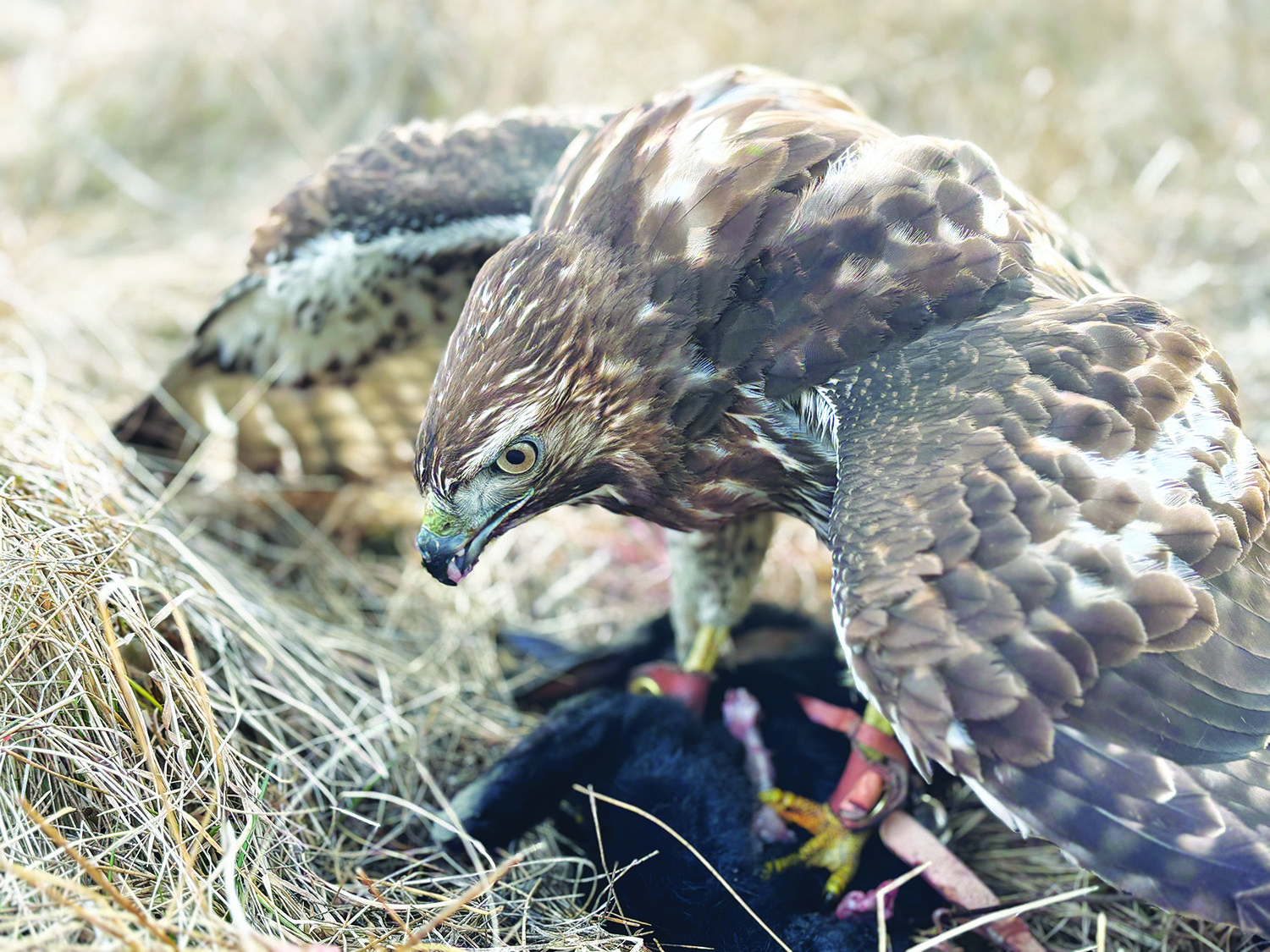
She is working toward acquiring a goshawk but believes later in the season may offer better opportunities. As winter approaches, food becomes less abundant, and birds have more time to mature and develop hunting experience.
Falconry offers several levels of certification, beginning with apprentice and advancing to general and master falconer. As practitioners gain experience, they can qualify to keep additional birds, subject to applicable regulations. But having the ability to keep more birds does not necessarily mean a falconer will want to do so. Sullivan said many practitioners choose to focus their efforts on a single bird, developing that relationship rather than dividing their time among several animals.
The hunting season for falconers generally follows Montana’s upland game bird season, with a longer closing period that extends through March 31. Sullivan said the season runs from Sept. 1 through March 31.
For those interested in learning more about the sport, Sullivan recommends visiting the Montana Falconers Association website at montanafalconers.org.
Falconry requires patience, money and a willingness to learn from experienced practitioners. But for Sullivan, the effort has offered something distinct from other forms of hunting: the chance to work alongside a wild animal, build trust and take part in a tradition that has endured for centuries.
Leave a Reply