by John Dowd
Stevensville is the oldest Community in Montana, and with so many years behind it, it should come as no surprise that it also has its fair share of scary stories. For those who believe in ghosts, the Bass Mansion has no shortage of these stories.
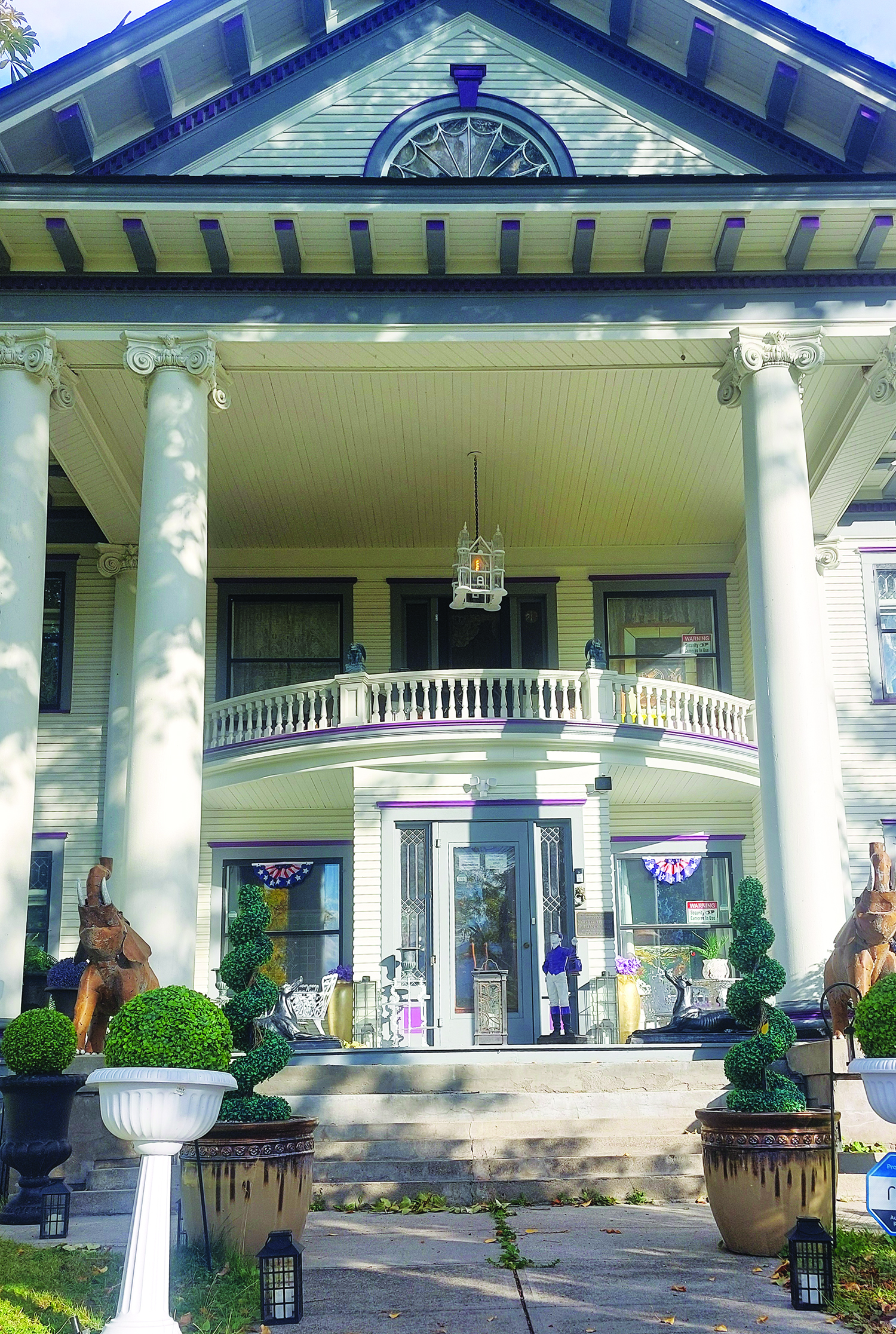
Visitors have reported seeing a woman believed to be Mrs. Bass in an upstairs window, while others describe a mysterious figure near the garage. There are accounts of unexplained perfume scents, animals reacting to seemingly empty spaces and unusual activity in the basement.
The mansion’s current owner, Barry Barnes, said paranormal investigation groups have visited the historic home to film and study the reported activity. He has also hosted physicians and paranormal researchers and has been told the property is among the most active paranormal sites in Montana.
Much of the reported activity, Barnes said, has been described as subtle and nonthreatening. Some witnesses have even characterized it as protective.
The stories have added a supernatural reputation to a home that already carries more than a century of history in the Bitterroot Valley. Barnes said he was not told about the mansion’s reputation for hauntings before he bought it six years ago. His decision to purchase the property was not driven by an interest in the paranormal, but by a desire to honor his parents, whose families had lived in Montana for generations.
Since then, he has spent years working to restore the house, which he said had been neglected for more than 30 years before he acquired it. When Barnes took ownership, nearly every window was cracked or broken. The grand staircase had missing, broken or displaced spindles and the property required extensive work.
As he continues restoring the home, the stories surrounding it remain part of its identity.
Among the reported paranormal experiences at the Bass Mansion are sightings of a woman believed to be Mrs. Bass looking out from a window on the upper floor.
The Bass Mansion’s history began long before its reputation for hauntings became a topic of conversation. Brothers William and Dudley Bass came to Montana from Missouri in 1864, drawn west by reports of promising mining opportunities. When prospecting failed to produce the fortunes they had hoped for, the brothers settled in the Bitterroot Valley and turned to agriculture.
They became early figures in Montana’s fruit industry, operating Pine Grove Farm, which produced about 10,000 boxes of apples annually by the turn of the 20th century. The apples were shipped to markets as distant as New York and the East Coast.
Dudley Bass later bought out his brother’s interest in the operation and sold the ranch in 1907. He moved to Stevensville with his wife, Etta, and their son, Lee.
In 1908, Bass commissioned Montana architect A.J. Gibson to design the family’s new home. Gibson was a prominent architect whose work included the Missoula County Courthouse and the Daly Mansion in Hamilton. The Bass Mansion’s formal design reflects the architectural tastes of the early 20th century, with a grand front entrance, classical columns and a carefully balanced exterior.
Barnes, an interior designer by trade, describes the house as a blend of Neoclassical and Victorian influences. Inside, the home features a sweeping U-shaped staircase, decorative ceiling beams, pocket doors and hardwood finishes. Tall windows with beveled and leaded glass transoms provide natural light throughout the house.
The design emphasized symmetry so strongly that a false chimney was added to balance the exterior.
The Bass family lived in the home for about 60 years, retaining ownership until 1959. The mansion is now listed on the National Register of Historic Places.

Its long history provides a backdrop for the stories told about its former residents, including the woman some visitors believe they have seen in the upstairs window.
Another reported figure has been seen near the garage. Other accounts involve the smell of familiar perfumes when no apparent source is present, along with animals reacting to things their owners cannot see. The basement has also been the focus of reports of unexplained activity.
Barnes said several paranormal groups have visited the property to investigate or document these accounts. Their interest has helped build the mansion’s reputation among people who study allegedly haunted locations.
The reports remain accounts from witnesses, rather than independently verified evidence of paranormal activity. But for those who have experienced something they cannot explain, the mansion’s age and history offer plenty of room for speculation.
The reported activity has not all been described as frightening. According to Barnes, some witnesses have characterized their experiences as gentle or even protective, rather than malicious.
That distinction makes the mansion’s reputation different from the familiar image of a haunted house filled with violent disturbances. Instead, the stories describe a place where unexplained sights, smells and reactions have become part of the experience for some visitors.
Barnes, an interior designer who spent more than 45 years working in the Jackson Hole, Wyoming, area, has devoted considerable time to restoring the property. He said his design career took off after Harrison Ford became his first client. Barnes also has a background in rodeo. He said he entered a rodeo arena at age 14 and later helped establish the International Gay Rodeo Association, which was recently recognized by the Smithsonian.
His work on the mansion has brought him into close contact with the home’s architectural details and its years of wear. Although the paranormal stories have attracted outside interest, Barnes said the house’s preservation remains a continuing project. The condition of the property when he purchased it meant that much of the work involved repairing and restoring existing features.
The mansion was once open for tours during community events. Barnes eventually stopped offering them after people began entering the property at other times, apparently believing it was a museum.
The house is a private residence, not a public museum, and visitors should respect the property and its boundaries.
For Barnes, the mansion is both a restoration project and a connection to Montana’s past. For those drawn to its reported hauntings, it is also a place where stories of unexplained encounters have become intertwined with its history.
Whether the figure near the garage, the woman in the window or the unexplained scents have a supernatural explanation is a matter of belief. The reports, however, have given the historic Stevensville home a second life in local lore — one that seems especially suited to Halloween.
Leave a Reply