by John Dowd
Ravalli County voters will decide in November whether county commissioners should serve six-year terms instead of the current four-year terms after commissioners approved the second reading of Ordinance 47 on Wednesday, Aug. 19.
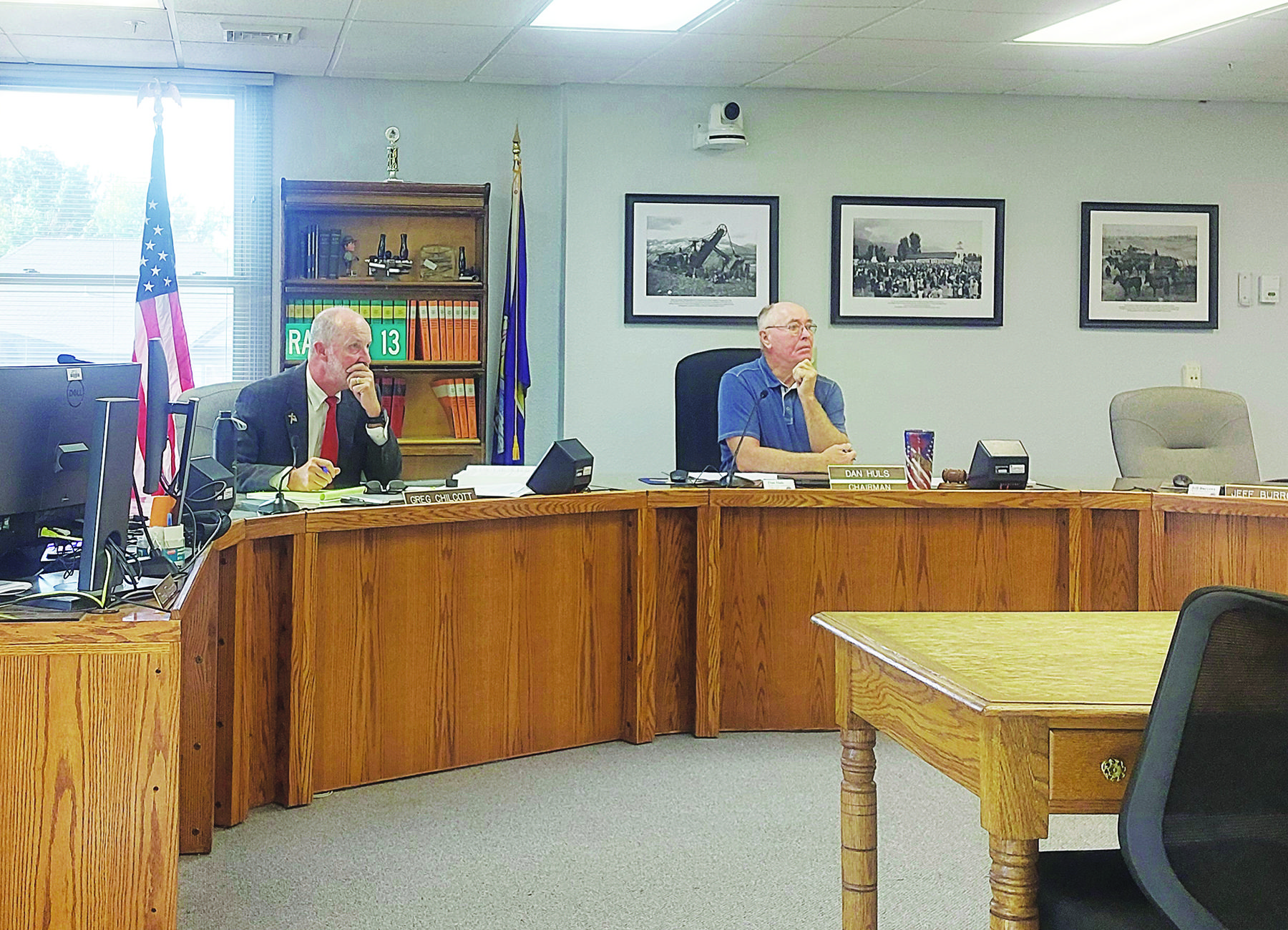
The ordinance, proposed by Commissioner Greg Chilcott, would amend the county’s form of government to establish six-year, staggered terms for the three-member board of county commissioners. The measure will appear on the Nov. 3 general election ballot.
Under the proposal, one commissioner would be elected every two years. If approved, the change would take effect for District 3 on Jan. 1, 2027, District 2 on Jan. 1, 2029, and District 1 on Jan. 1, 2031.
Chilcott said the primary reason for the proposal is continuity in county government. “It is not only hard on commissioners, but it’s hard on staff,” Chilcott said, describing the disruption that can come with regular turnover among commissioners. Commissioner Dan Huls, who is serving his second four-year term, said it took him at least two years to become fully comfortable in the position.
The commissioners noted that Ravalli County has previously had six-year commissioner terms. The county also once had five commissioners before moving to its current three-member commission. Chilcott said most Montana counties have six-year terms for commissioners. He and Huls added that longer terms would provide more continuity of government and allow experienced commissioners to help newly elected officials navigate the job.
Chilcott also said the staggered elections could make the process easier for voters and the county elections office by limiting each election cycle to a single commissioner race. According to Chilcott, Commissioner Jeff Burrows previously expressed support for the proposal for this reason, noting that it can be easier for voters to focus on a single commissioner during an election.
Several residents raised that concern during public comment.
Gil Gale, who spoke against the change, said the county’s decision in 2006 to reduce commissioner terms from six years to four was motivated by accountability. “Four years is a long time,” Gale said.
Gale said other elected offices with significant responsibilities have four-year terms and argued that longer terms could contribute to complacency or what he called an “entrenched and entitled philosophy.”
He added that voters approved the move to four-year terms by about 75% in 2006 and that the decision was reaffirmed by another vote about a decade later. “What has changed?” Gale asked. Gale said elected officials should be held accountable more frequently rather than less frequently.
Chilcott said the position of county commissioner differs from many other elected offices because commissioners oversee responsibilities across the county’s government. “There is a steeper learning curve to this,” Chilcott said.
However, Chilcott acknowledged a potential drawback: If voters elect a commissioner they later consider ineffective, the longer term would mean waiting an additional two years before that commissioner could be replaced through an election.
Wayne Adair also questioned the longer terms during public comment. “If we decide a future commissioner is doing an inadequate job, why should we wait an extra two years?” Adair said.
David Leslie, who also spoke in favor of retaining the current structure, said county staff provide continuity between elected officials. “The staff actually have quite good reliability, experience and counsel for you,” Leslie said.
Leslie characterized the disruption associated with elections and changes in elected leadership as an intended part of representative government. “The disruption you are feeling is a feature, not a bug,” Leslie said.
After public comment was finished, Chilcott gave some final thoughts, during which he said his support for the proposal was not based on his own political future because his current term expires this year. “I don’t have a dog in this fight,” Chilcott said. “I would not have suggested this if I didn’t believe this would help local government.”
Ordinance 47 states that if voters approve the change, all other provisions of Ravalli County’s current form of government will remain unchanged. The ballot will ask voters whether to approve six-year commissioner terms, implemented on the staggered schedule outlined in the ordinance, or retain the existing four-year terms.
The commissioners approved the ordinance on second reading Aug. 19, clearing the way for the question to go before voters in November.
Bill Campbell says
To be candid, I voted for the 4 yr term because I felt the county was feeling the effects of some entrenchment and a more frequent exposure to the voters seemed to be, and was, a good move. The Ravalli County of the past is not that here now. As the demographics have evolved, so have the demands on government. The complexity of the issues and the answers to resolve them increased and with that the need for additional time to adapt to and deal with those changes. To do that effectively requires many considerations. They are individuals functioning as a team. They will prove their abilities. These days, it just takes a little longer..
Shaun Clifton says
I strongly oppose extending Ravalli County commissioner terms from four years to six.
This question has already been put to Ravalli County voters — twice. In 2006, voters chose four-year terms over six-year terms by roughly 78%. In 2016, voters were asked again and once again overwhelmingly chose four-year terms, roughly 75% to 25%.
So the question I have is the same one raised at the meeting: What has changed?
The argument that commissioners need six years because there is a steep learning curve is not a compelling reason to reduce voter accountability. These are elected positions, not permanent staff positions. Four years is already a substantial amount of time to learn the job, govern effectively, and demonstrate to voters that you deserve another term.
Continuity is important, but our current system already provides it. Commissioner terms are staggered, and experienced county staff provide institutional knowledge regardless of who occupies an elected seat. In fact, Ravalli County’s own website describes the current four-year staggered terms as a system designed to maintain board consistency.
Regular elections and the possibility of turnover aren’t flaws in representative government. They are an important part of accountability.
If a commissioner is doing an excellent job, voters can re-elect that person. But if a commissioner is ineffective, unresponsive, or takes the county in a direction voters don’t support, citizens should not have to wait six years for the opportunity to make a change.
Ravalli County voters have already made their preference clear — more than once. I see no compelling reason to weaken that level of voter accountability now.
I will be voting to retain four-year terms.