by John Dowd
Last weekend, while most people were celebrating the country’s 250th birthday, a group in Darby was remembering another historic event that took place near the town 220 years ago.
According to historians, the Lewis and Clark Expedition came through the Bitterroot Valley and was in Darby around the Fourth of July. The Bitterroot Heritage Civic Group, a local Darby organization, has been working to showcase the area’s historic significance and the events surrounding the expedition while it was there.
“We’re really proud of our community and the progress we’re making, as far as historic connections go,” said Gay Finley, a member of the group.
Finley said the organization has worked to increase awareness of Darby’s role in the expedition, noting that the group’s activities and Sacajawea Park have been featured in the Lewis and Clark Trail Heritage Foundation’s newsletter.
The group’s primary mission is maintaining and improving Sacajawea Park, located along Main Street in downtown Darby. The park occupies the site of a former restaurant that was destroyed by fire and has been transformed into a community gathering place through volunteer efforts and local partnerships.
Among the park’s recent improvements are decorative banners installed with assistance from the Trapper Creek Job Corps. The park is also home to a brass sculpture of Sacajawea that was cast from the same mold used for the statue displayed at Fort Clatsop in Oregon. According to Finley, the Darby statue is the third casting made from that mold.
Sacajawea Day is one of three annual events organized by the civic group. The second, Writers Day, is held Aug. 1 in Darby’s larger town park, where local authors gather to read selections from their work.
“It has been excellent,” Finley said of the event.
The group’s third annual gathering is a chili festival held each September, where attendees sample a variety of chili recipes and vote for their favorites. Organizers also plan to expand the festival by adding art demonstrations and other activities designed to showcase local talent.
Finley said the organization is always looking for new members interested in preserving Darby’s history and supporting community projects.
Ted Hall, a local author, spoke before the guest speaker arrived. Hall has written two books about the expedition and has been very active in researching the expedition and pinpointing locations. He unveiled a new metal map based on Clark’s maps and modern GPS data. According to Hall, some of Clark’s maps are difficult to use to pinpoint exact locations because of issues with scale and perspective. However, he credited Clark’s maps with providing a near “perfect inventory” of trails, streams and waterways.
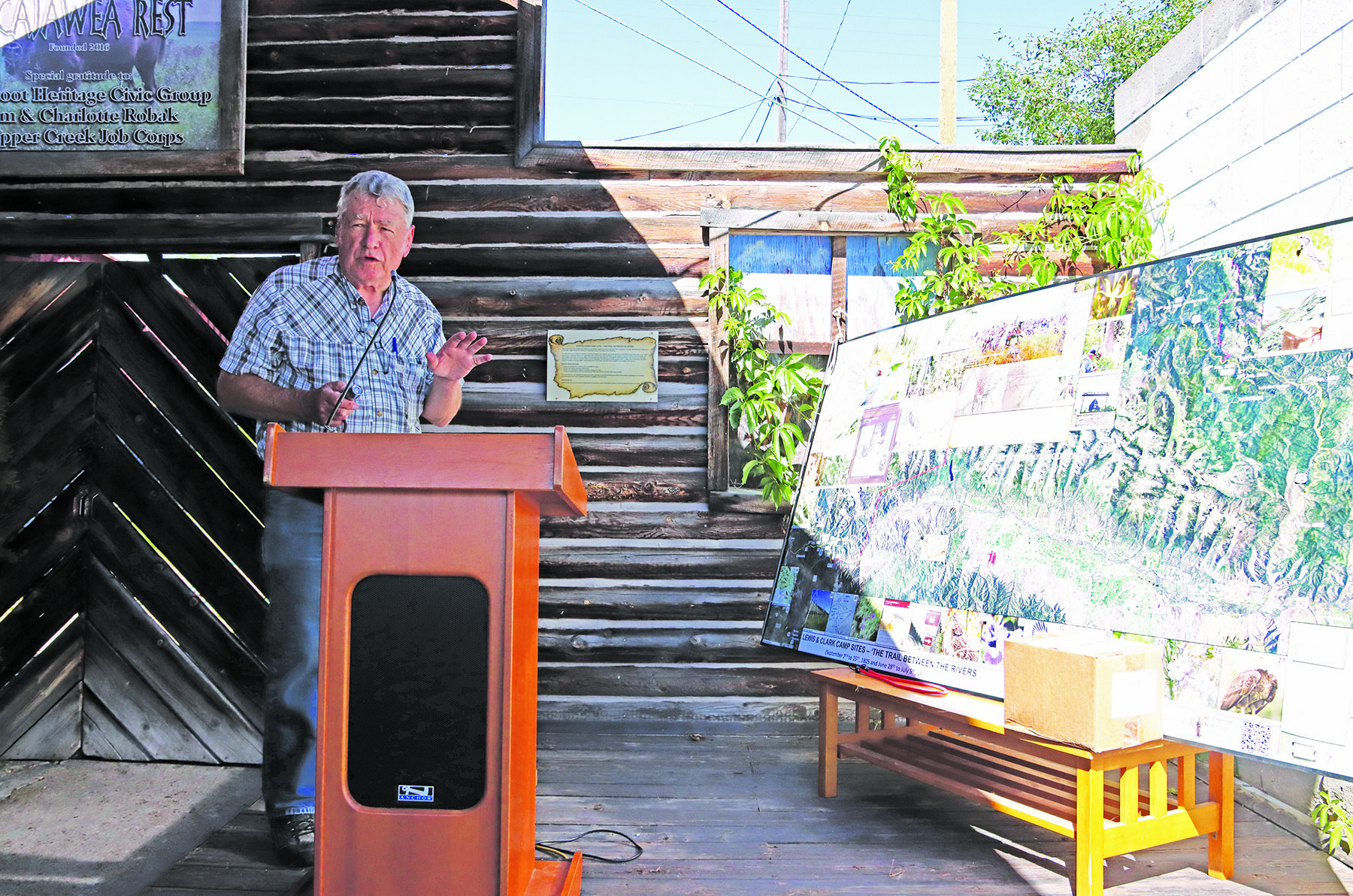
Using this information, Hall said researchers were able to create a highly accurate map of the Lewis and Clark Expedition’s route.
The map also features a QR code linking to an online interactive version, where users can zoom in and follow the expedition’s route.
“So you can see exactly where Lewis and Clark went,” Hall said.
The overall map shows the expedition’s path through Ravalli County.
The event’s featured speaker, Rozina George, offered attendees a Native perspective on the expedition. George is Lemhi Shoshone and a descendant of Sacajawea.
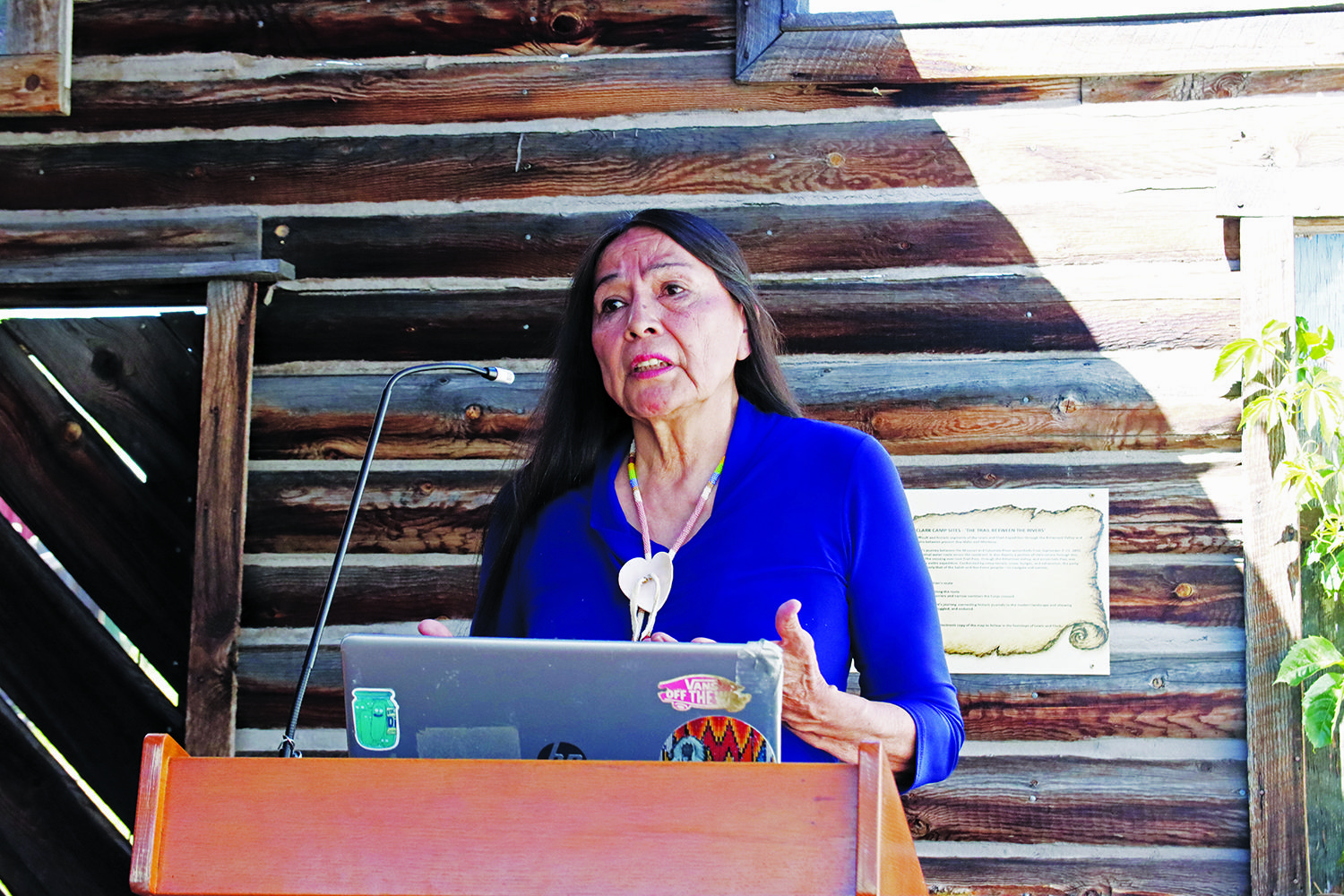
Her presentation focused on Jean Baptiste Charbonneau, the son of Sacajawea and French-Canadian fur trader Toussaint Charbonneau, who joined the Lewis and Clark Expedition as an interpreter. Sacajawea’s knowledge of the Shoshone people, her ability to communicate in multiple languages and her familiarity with portions of the country west of the Rocky Mountains proved invaluable as the expedition crossed the West.
Jean Baptiste was born near the beginning of the journey and accompanied his mother for more than 5,000 miles as the expedition traveled across the continent. George explained that much of the trip was made with the infant secured in a traditional cradleboard.
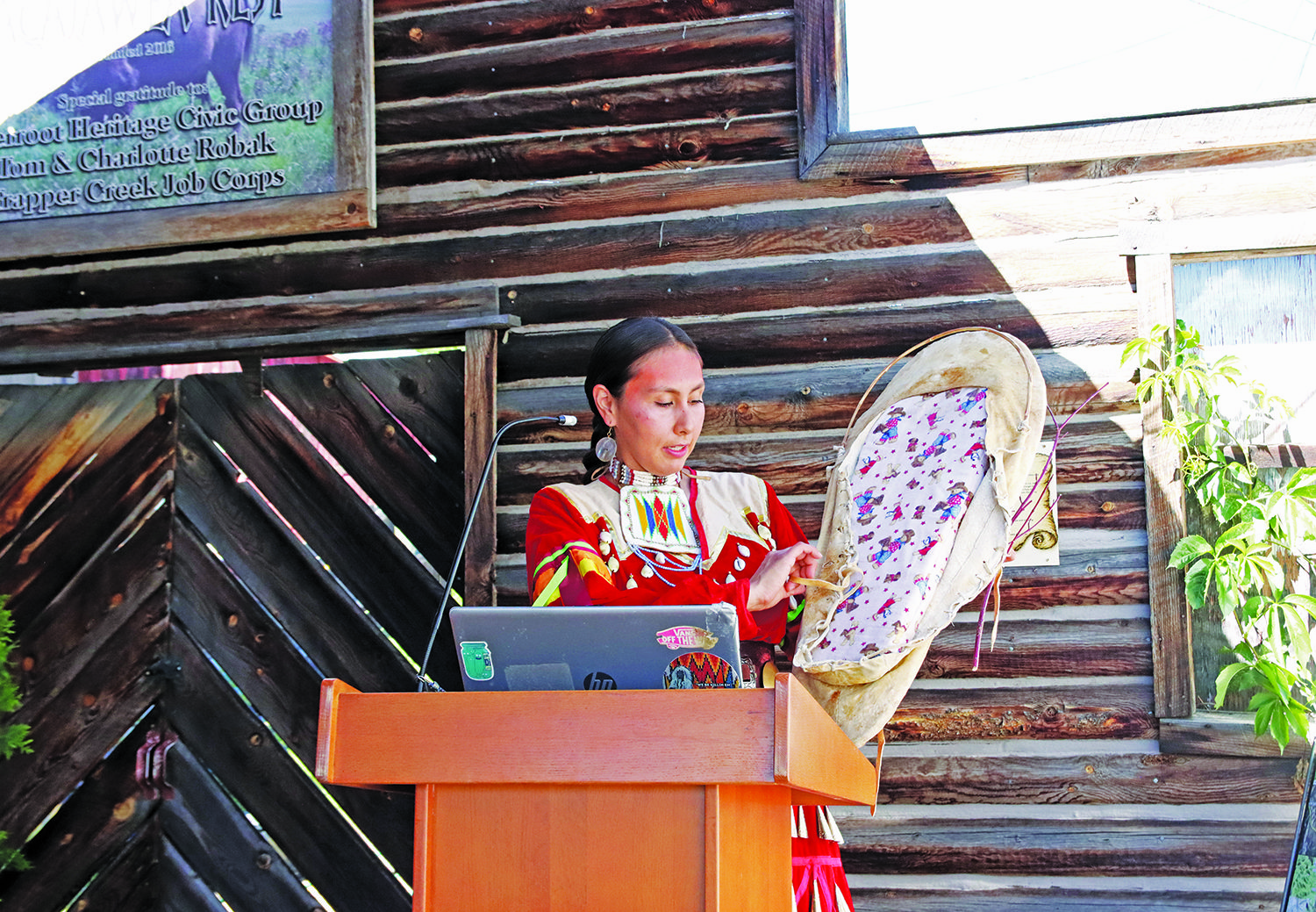
George’s daughter, Zahnive George Bettles, demonstrated a Shoshone cradleboard by placing her young son inside the handcrafted carrier for the audience to see.