by Sarah Glass
It was a serene morning in the Bitterroot National Forest near Lost Horse Creek Lodge on June 25. The forest was awake, birds speaking in staccato and piercing calls. A woodpecker was at work on the auburn bark of a nearby Ponderosa pine tree. Then came a different type of call, one from Marine Master Sgt. Newman. “Do you have an ETA for when the bird comes in?” he asked over his radio.
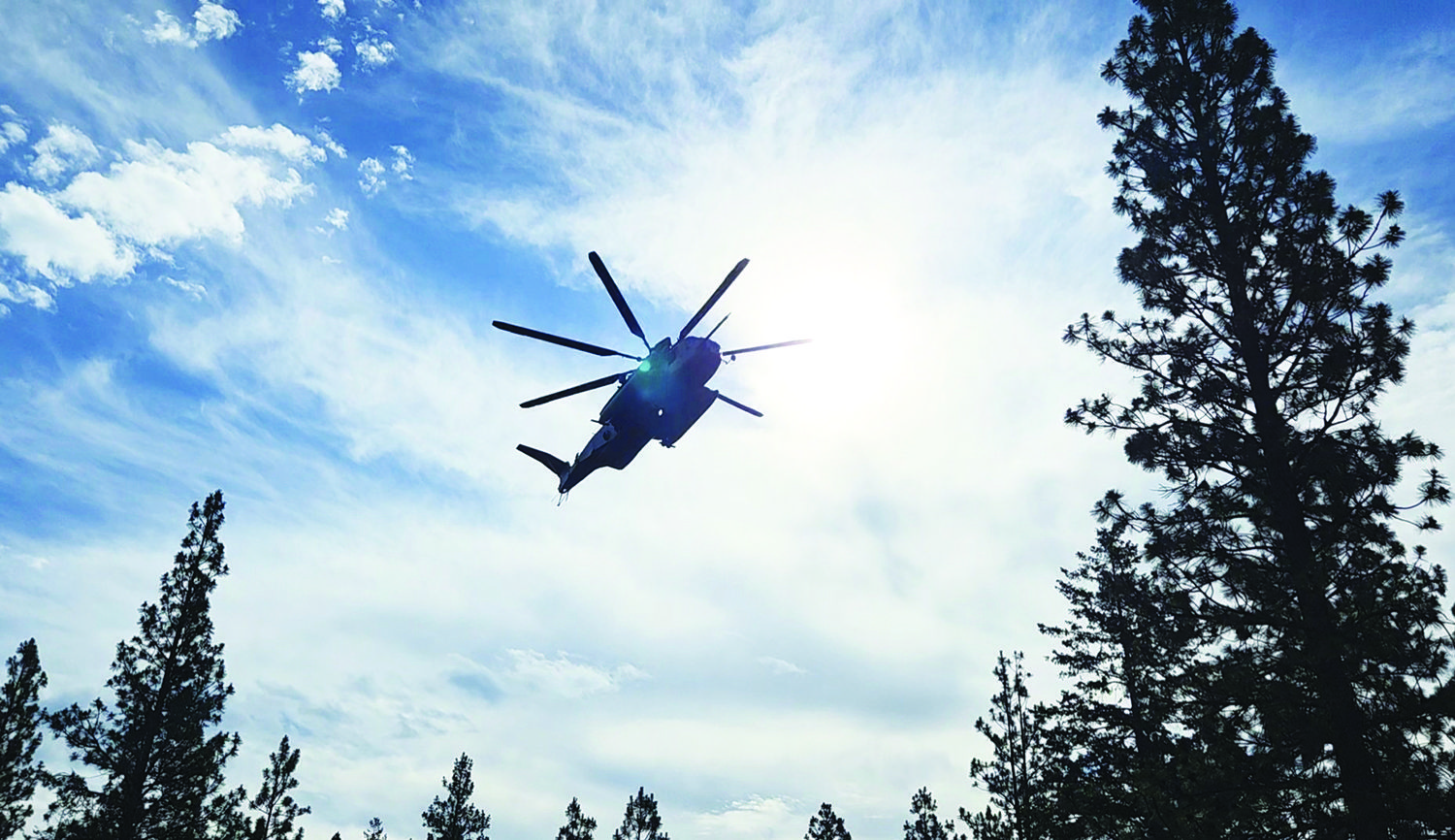
A small group of Forest Service (FS) members with the Bitterroot National Forest and military members involved in Innovative Readiness Training (IRT) focused on aiding the FS stood apart from the aircraft operation zone, where repair materials for the Selway suspension bridge awaited transport. Gusts of wind stirred, and the thrum of rotating blades intensified as one of the largest and heaviest helicopters in the U.S. military – a Super Stallion CH-53E – came into view.
The helicopter, known for its heavy-lifting capacity, then disappeared beyond view, where military support specialists worked to securely attach cargo to it.
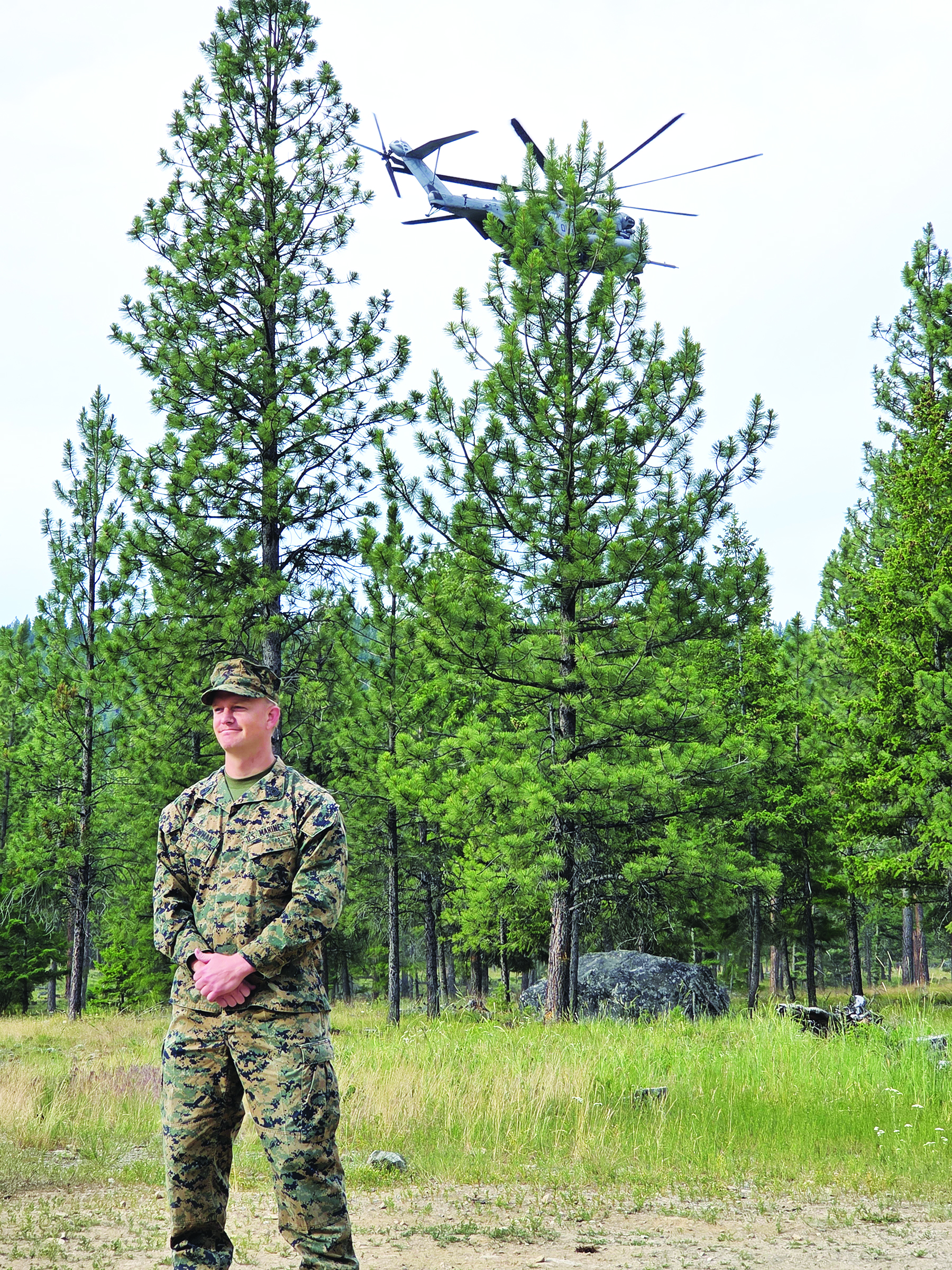
The exercise was a display of one of the many ways through which the Department of War (DoW) IRT simultaneously provides community service and military training on U.S. soil. According to IRT literature, the program was authorized under Title 10 U.S. Code §2012 in response to the 1992 “Rebuild America” initiative. The code grants the DoW the authority “to provide services and support for eligible non-Department of War organizations and activities” within the U.S. and its territories. IRT is meant to increase military deployment readiness while providing “key services (health care, construction, transportation, and cybersecurity) with lasting benefits for our American communities.”
Nearly 300 U.S. guardsmen and active-duty reservists will be participating in IRT activities in the Bitterroot Valley throughout July. About 150 members arrived in the first wave late in June, said FS District Ranger of the Darby-Sula Ranger District Steve Brown. After their two-week training requirement is met, a second wave will arrive for another two weeks of collaborative efforts to complete FS projects. This is an opportunity for different military branches to train with each other and work towards a larger goal, said Master Sgt. Newman.
Brown learned about IRT from a work colleague who became familiar with the program during his time with the Air National Guard. “When he came up here, he started telling me about this program and how you can make proposals for [the military] to come help you with projects. So, [the FS] started working on it. It was probably about two years ago that we made the first proposal. We were not initially accepted, but then in the next round, we were. Over the past year, we have been involved with the various units’ planning.”
IRT in the Bitterroot Valley is the largest operation of its kind taking place in the U.S. this year, and “300 people is double the Bitterroot National Forest work force,” said Brown. “For each project that they are working on, we’ve identified a [FS] project lead, and that person is responsible for coordinating with the military and communicating to them, making sure they understand what the need for that project is.”
Initiatives were selected based on the benefits they would provide from a military training standpoint and their ability to be completed during the military’s stay. They include trail and road maintenance, historic cabin restoration, windstorm damage repair and water system upgrades throughout the West Fork and Darby-Sula Ranger Districts.
Marine Master Sgt. Newman explained that helicopter sling load training typically involves moving massive cinder blocks weighing from 2,000 to 8,000 pounds. Transporting materials for the FS, he said, will provide reservists with experience securing different materials in real-world scenarios.
Military presence has not only been a boon to the valley in the sheer amount of manpower dedicated to FS undertakings, but the strategies implemented have made it possible to take on obstacles in new ways. One such novel application is the use of an explosive ordnance team to blow out culverts and clear large rocks blocking trails.
“We have some de-commissioned roads where the culverts never got pulled out, but the roads have grown in,” said Brown. “So, if we wanted to go back there with an excavator and pull those culverts, we’d have to cut the roads back out and reopen them… If the culverts clog during a rain event or something, then the water will just blow the road out and put sediment in the stream.”
Brown mentioned that bringing IRT operations to the valley would not have been possible without the immense show of community support it received. The Ravalli County Airport is providing space to house the military’s two Super Stallion CH-53E helicopters; The Town of Darby has opened the high school gymnasium and football field to accommodate military personnel lodgings, and Trapper Creek Job Corps is participating as well.
Brown hopes the experience will pave the way for future IRT partnerships in the Bitterroot.
Rakun says
There is no such entity as the Department of War, I assume you mean the Department of Defense.