by Mike Hudgins
When Mike and Tari Conroy began talking about creating a bluegrass festival in 2009, they weren’t trying to build Montana’s biggest music event. They envisioned something much simpler: an old-time gathering where families camped together, musicians crowded around a single microphone on a rustic stage, and after the last scheduled act left the stage, the music carried on around campfires late into the night.
Seventeen years later, that vision is coming to an end.
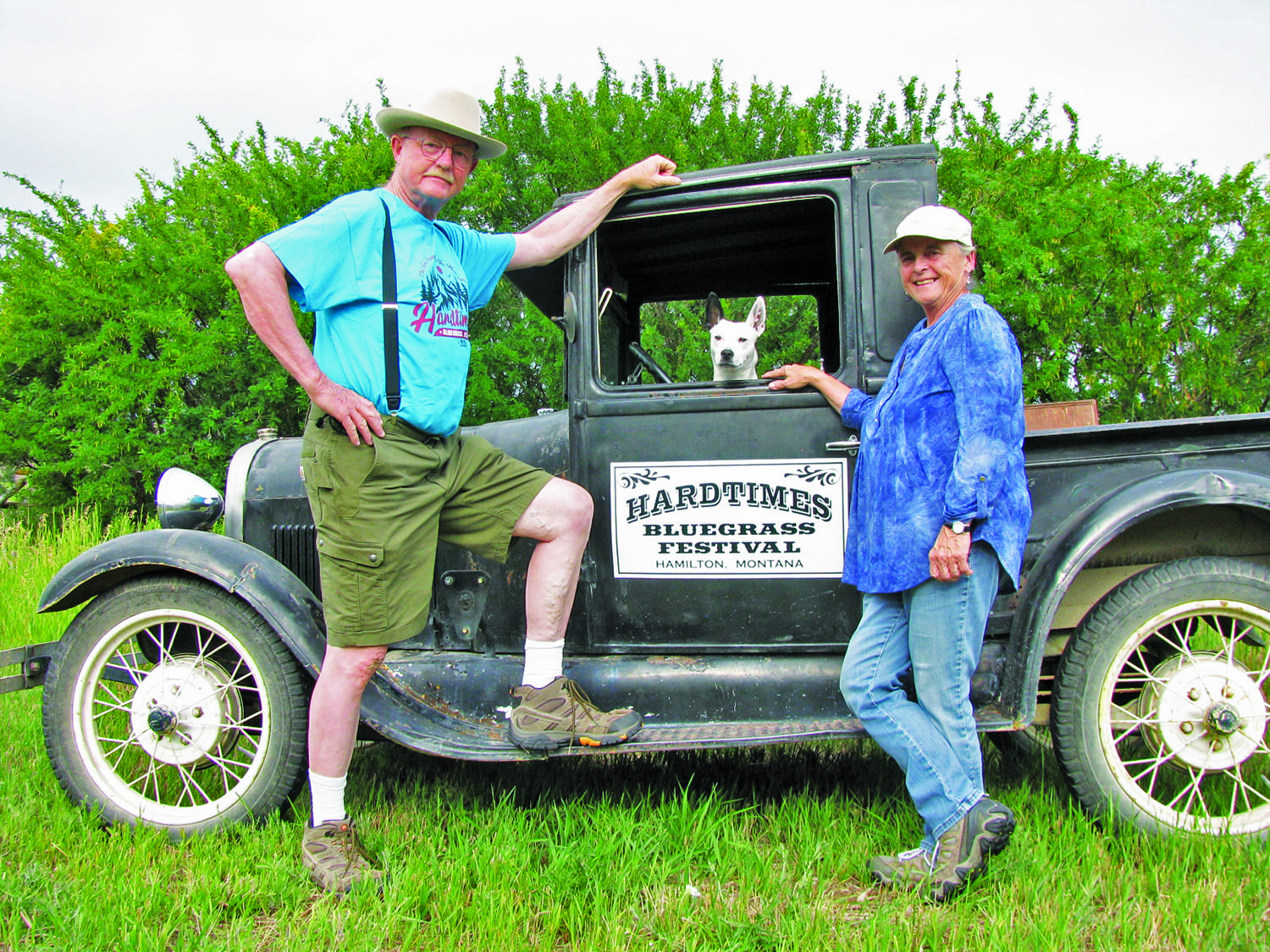
Mike and Tari Conroy founded Hardtimes Bluegrass Festival 17 years ago. The final festival will be held July 24-26. Photo courtesy of Mike Conroy.
This summer’s Hardtimes Bluegrass Festival, scheduled for July 24-26, will be the festival’s last. For the Conroys, the decision wasn’t about declining interest or a lack of success. It was about recognizing they’d accomplished exactly what they set out to do.
“We were 100 percent successful,” Mike said. “This is exactly what we wanted to do.”
The idea for Hardtimes grew from conversations the couple had about recreating the kind of traditional bluegrass festivals they remembered. Rather than multiple stages and nationally known headliners, they envisioned a smaller, family-oriented event centered on traditional music.
“It’d be really cool to have an old-time bluegrass festival like they used to have back in the old days,” Mike said. “They’d have one microphone, and everybody would be camped right around it, playing the old-time stuff the old-time way.”
Finding a home for that vision came through little more than conversations with friends and neighbors. After securing permission to use neighboring ranch properties, the Conroys decided to take a chance.
They invested $2,000 from their savings to launch the first festival. Mike even sold a prized banjo tone ring to raise enough money to purchase the festival’s first 20 T-shirts.
“It was very bare bones,” he said.
From the beginning, the festival reflected the couple’s philosophy. A single stage was built to resemble the front porch of an old cabin, complete with one microphone. Regional musicians took center stage, while campers gathered nearby and impromptu jam sessions carried on well into the night.
“We wanted the old-time experience,” Mike said. “It was all family oriented. People wanted to bring their kids… Some of the best parts of the festivals are at night when all the bands are out jamming after dark.”
Rather than pursuing expensive national acts, the Conroys focused on showcasing regional musicians and preserving traditional bluegrass.
“There’s so much local talent around here,” Mike said. “Our intent was to get all those local bluegrass bands involved in this.”
Over 17 years, more than 45 bands performed at Hardtimes, many returning year after year. Volunteers became as much a part of the festival as the performers themselves, helping park vehicles, work the gate and welcome visitors.
“We’ve got all these friends that show up to help us take tickets and park cars,” Mike said. “Friends and family.”
Like any long-running festival, Hardtimes faced its share of challenges. Finding vendors, advertising on a limited budget, unpredictable weather, wildfire concerns and the financial uncertainty of organizing a three-day festival all became part of the annual routine.
“We’re old and wore out,” Mike said. “It’s a tremendous amount of work… I’m just kind of tired of the worry.”
As the final festival approaches, Tari has been reflecting on those years in her own way. She has spent recent weeks sorting through thousands of photographs and assembling display boards that will hang throughout the festival grounds. Along with traditions such as homemade huckleberry jam for band contest winners and countless personal touches added over the years, the displays celebrate the friendships and memories that became the heart of Hardtimes.
The Conroys say those relationships, more than attendance numbers or finances, are what they’ll remember most.
For Mike and Tari, it was never about building the biggest bluegrass festival in Montana. It was about creating a place where traditional music, community and friendship came together for one weekend each summer.
“Our dream was always that everybody would have really fond memories of this one,” Mike said. “When they’re in the rest home, we’d like to think they’d think back about it and really enjoy what we did.”
Looking back, Mike believes they’ve done exactly that.