by Chuck Stranaha
I recall one evening on Hat Creek in Northern California when squadrons of salmon flies were overhead. The nighthawks were gorging themselves on the big bugs in an acrobatic aerial show. Below them, the trout were active on the surface. There were plenty of rises. Frustrated anglers were striking out – situation normal for Hat Creek.
To figure out what was going on, I waded in deep below a line of working fish… I bent over, felt chilly water run into my waders, clenched my teeth, and looked upstream. In the fading light I could make out a parade of small mayfly spinners. “Six-X, size eighteen Brown Quill!” I shouted back to my client. He made the change and started to connect.
The takeaways: Be observant. Carry whatever else might be hatching during a salmonfly hatch. Don’t be afraid to switch.
After seventy-four boats in the last three days have shown the same fish the same three bulky foam patterns, show them something different – maybe a fly with a slender silhouette and natural hair wing. Heavily-fished trout often get pattern-shy. Fish the popular patterns, certainly, but be prepared to show them something different – maybe a sparser pattern or a golden stone.
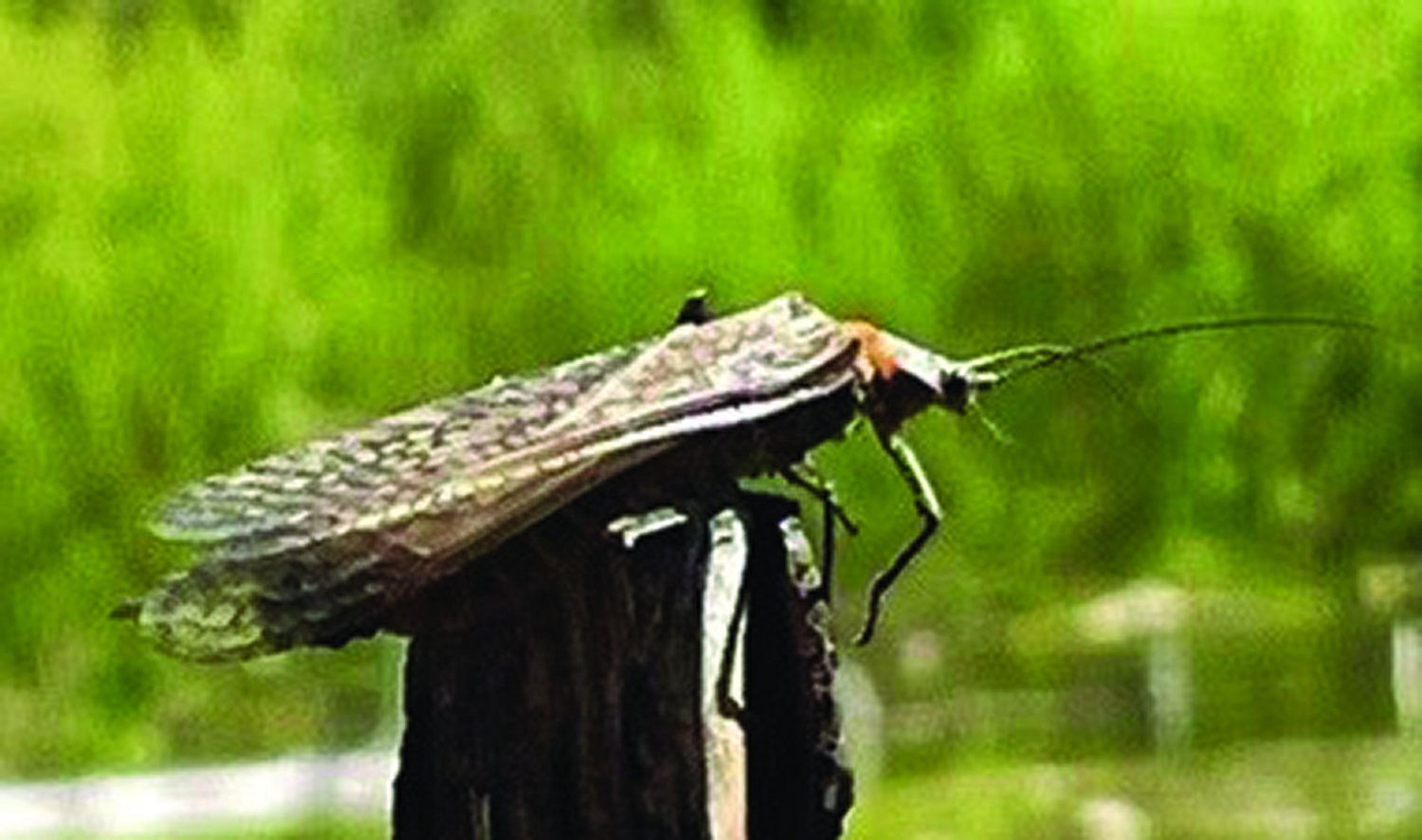
A lone salmonfly waits to take off. Photo by Rebecca Kidwell.
Nymphs are always an option. A slender rubber-legged salmon fly nymph sinks fast and will wiggle when it gets to the bottom. Movement that simulates life is important.
Lightly weighted nymphs, fished in quiet water toward the bank, often work when nothing else will. Heavy flies strike out for this sort of fishing. So do flies that don’t carry an accurate silhouette.
Carry both. You’ll need them to adapt to different situations.
A favorite strategy of mine is one I borrowed years ago from my mentors and legendary fly tyers, Cal Bird and Polly Rosborough. They knew that as many, if not more, salmonflies get eaten underwater than on top. They get washed under and drift until they get eaten.
When Nathan Paul was guiding for me he took a “busman’s holiday” to the Big Hole for salmon flies. I told him about Cal and Polly’s wet salmon fly patterns and tied some similar flies for him.
Those flies scored better than anything else his group fished that day – until he broke off the last one in the jaw of a brown that he swore would have scaled eight pounds.
The biggest trout in the stream will often wait below a small eddy or in a side current and take drowned salmon flies. It won’t bother to break the surface. A wet salmonfly can produce there when all else fails. It can also produce when dries are working, but will often produce more and bigger fish.
It’s easy to strike out with the salmon fly hatch. All you have to do is hit it wrong. Hitting it right might mean hitting it close to right, and being ready for whatever comes.
Leave a Reply