by Mike Hudgins
The Ravalli County Museum may be best known for preserving the history of Montana’s Bitterroot Valley, but its newest project looks less backward and more inward, asking a deceptively simple question: What does it mean to be a Bitterrooter?
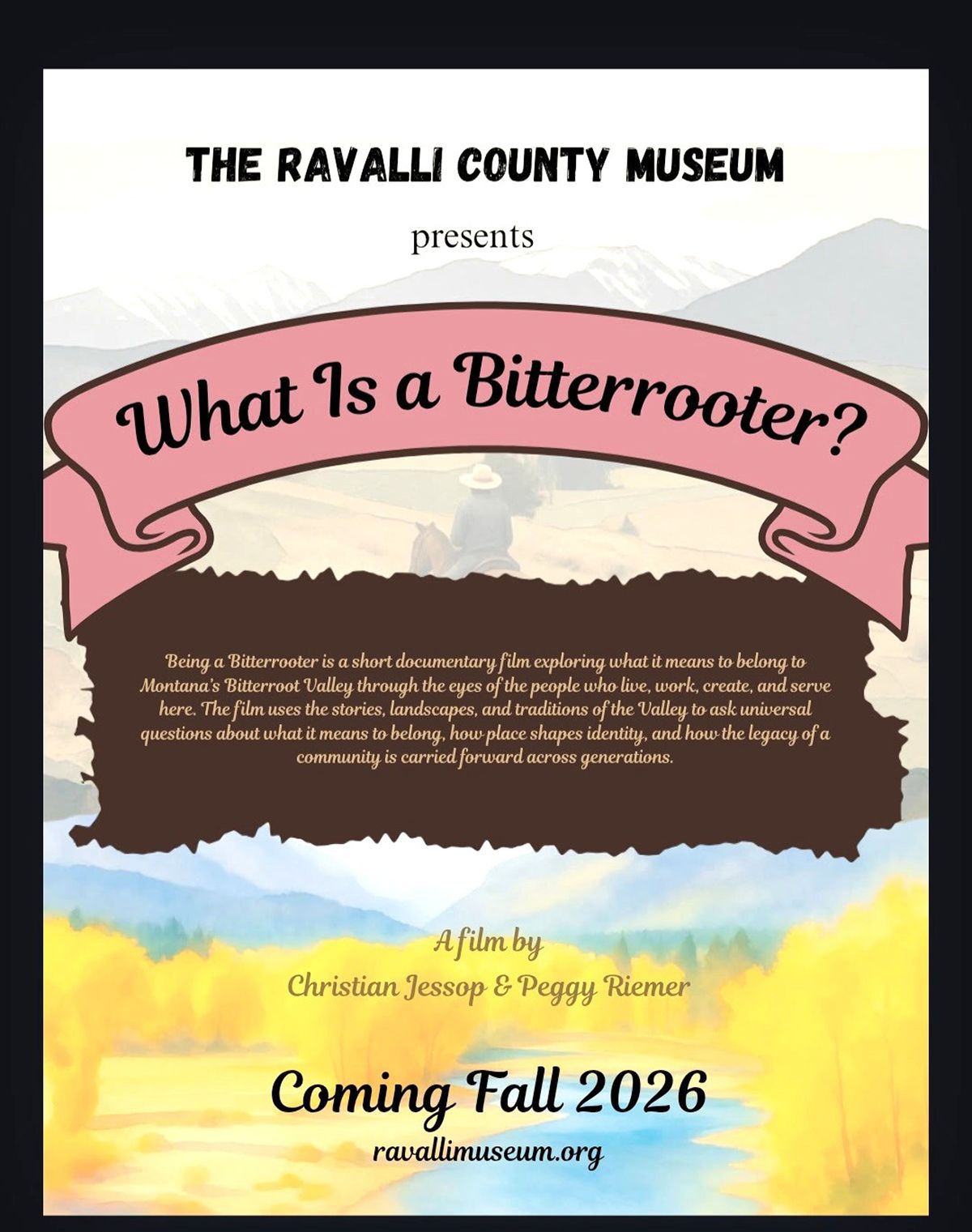
That question sits at the center of a documentary in production titled “What Is a Bitterrooter?” led by director Peggy Riemer and cinematographer/editor Christian Jessop. While the museum has long focused on collecting oral histories and documenting the valley’s past, the project carries that work into film, using documentary storytelling to capture the valley’s present-day identity through the voices of the people who live there.
“What Is a Bitterrooter?” is not structured as a traditional historical film. Instead, it is built around a question with no fixed answer, one that connects place, memory and identity across generations.
“It’s really about what it means to be a Bitterrooter,” Riemer said. “We’re just documenting life in the valley.”
The film gathers twenty-four participants from across the Bitterroot Valley, representing a cross-section of communities, generations and ways of life. Ranchers, educators, civic leaders, healthcare workers, artists, firefighters and students all contribute to a broader mosaic of experience. The goal is not to define the valley but to show how it defines itself through the people who inhabit it.
Jessop says the intention is to capture how different people, living different lives, interpret the same place.
“You’re going to see a condensed version of all the different things that are happening to make the community run,” he said. “Teachers, the mayor, a student at Corvallis High School, all thinking about the same place and how they’re contributing to it.”
That structure creates both opportunity and challenge. With each interview offering a different perspective, the filmmakers are now facing the question of how to shape those voices into a coherent narrative without flattening their differences.
“The challenge is going to be how twenty-four people give twenty-four answers that we don’t know in advance,” Riemer said. “How do you make it coherent and not just a series of disconnected ideas?”
Rather than looking for a single conclusion, the team is leaning into uncertainty. The documentary is designed to let themes emerge naturally through editing rather than being predetermined, allowing meaning to build collectively rather than individually.
Jessop describes the approach as curiosity-driven. Instead of statements, the film is built around questions that invite reflection.
“When that question, what it means to be a Bitterrooter, is brought up, it piques curiosity,” he said. “People start thinking about it, and hopefully that thought spreads.”
Early in production, certain patterns have already begun to surface. One of the most consistent is the pace of life in the valley. Across initial interviews, participants described a slower, more grounded pace
compared to more urban environments.
“It was all kind of a slower, more natural, holistic pace of life,” Jessop said. “Whether they were ranching or running a shop, it felt very peaceful.”
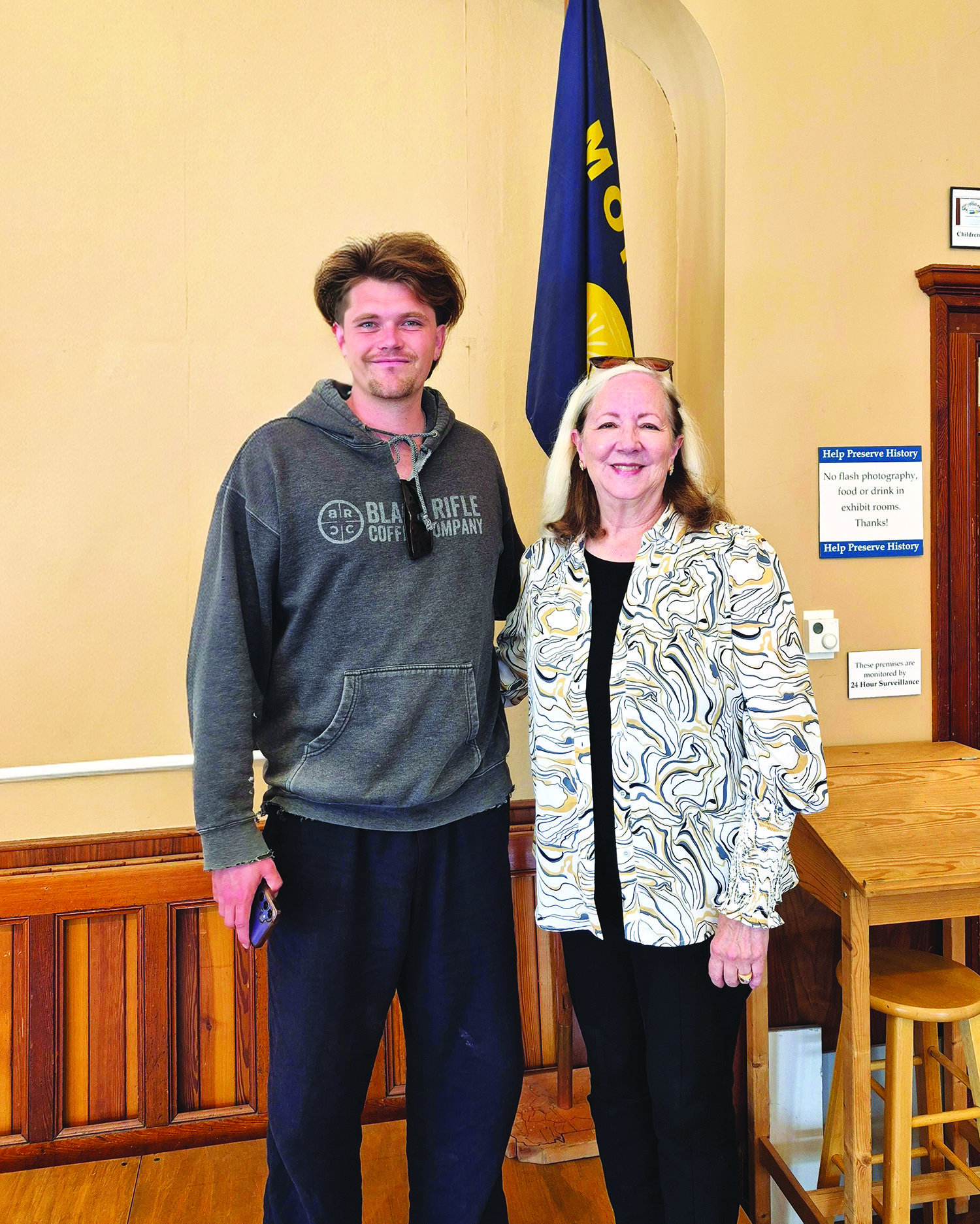
That sense of place extends into how residents talk about the land itself. Mountains, open space and small-town interconnectedness shape not just daily life but identity itself. The film suggests that “Bitterrooter” is less a label than a relationship between people, land and memory carried forward across generations.
Still, Riemer emphasizes that they are not working toward a predetermined message.
“We don’t have an end goal of what it turns out to be,” she said. “In some ways, the film will create itself.”
That openness also shapes how the documentary will reach audiences. While festival submissions and broadcast distribution remain possible, the immediate plan is community-based. Screenings will likely be held at the museum and in local venues, including schools, continuing the project’s focus on place and participation.
“We’ll definitely show it here at the museum,” Jessop said. “The purpose is to share it with the community because it’s their story.”
Beyond distribution, the filmmakers hope the documentary encourages reflection, not just on what the Bitterroot Valley is, but on how people define belonging in any place.
Riemer connects that idea to storytelling itself, which she sees as a fundamental human need and a way of preserving a moment in time.
“We’re hoping people will just tell their story,” she said, “and that it becomes a way of recording and preserving this moment in time.”
The film already seems to be circling a central idea: that identity is not a single definition, but a shared exploration shaped across generations by place, memory, and experience.
As Riemer put it, the question itself may matter as much as any answer it produces.
“What is it to be from somewhere?” she said. “What does it mean to be from here?”
In that uncertainty, the filmmakers seem to have found their story.