by Sarah Glass
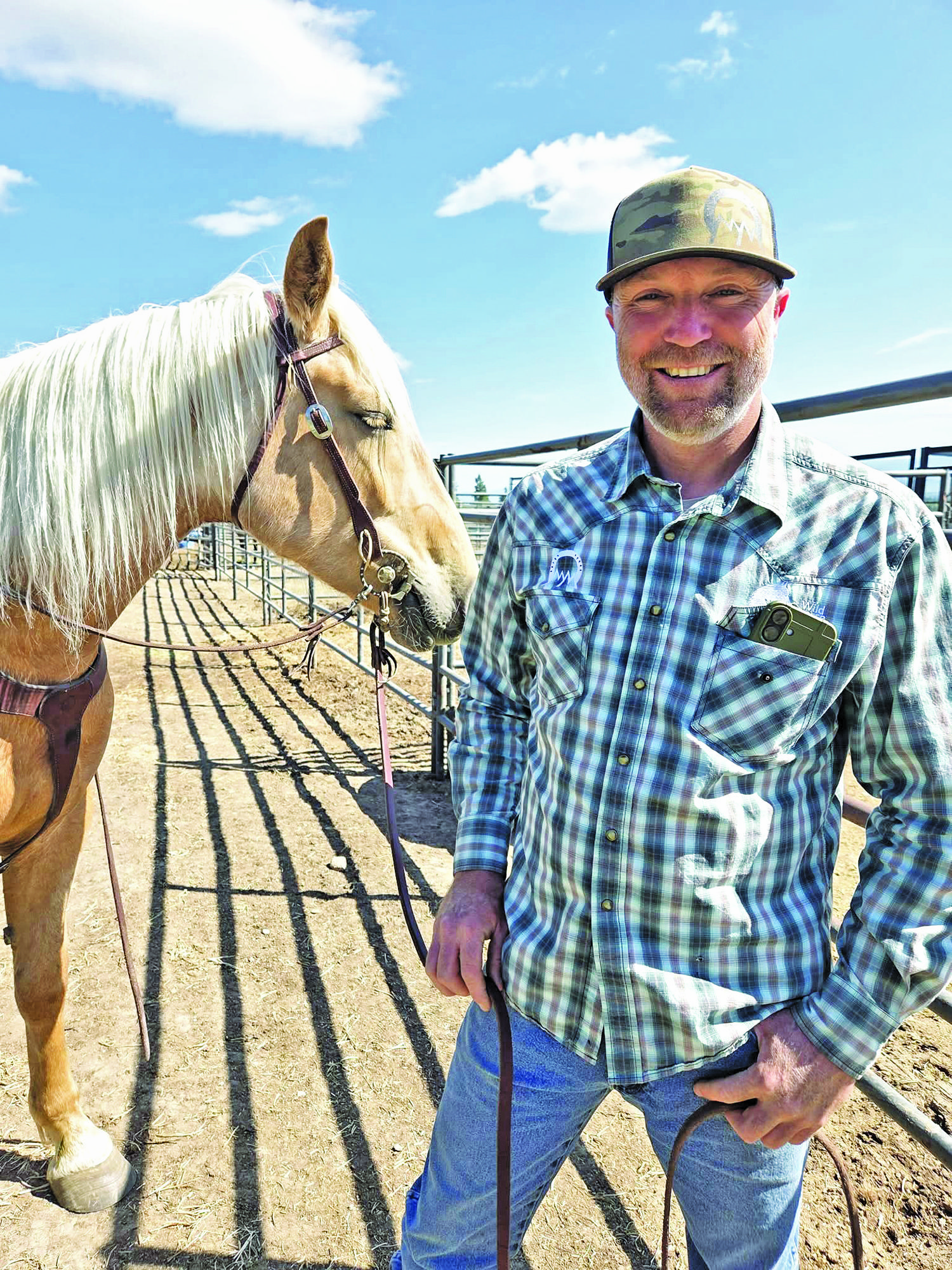
How should conservation and wildlife management look in relation to public lands in care of the Bureau of Land Management (BLM)? Matt Bischof, also known as “Mustang Matt,” at the Hamilton Training Facility at 736 Alvista Loop, says he doesn’t know the right solution. Some farmers who share grazing rights with wild horses and burros consider them invasive species. Others think the animals are iconic of the western plains and that they should not be disturbed. All Bischof knows, he says, is that the policies enacted by the BLM mean many wild mustangs and burros have the opportunity to integrate with humans and find loving homes, and he has been a part of the process in several states for nearly 15 years now.
According to BLM literature, “the Wild Free-Roaming Horses and Burros Act of 1971 entrusts the BLM with the responsibility to manage and protect wild horses and burros on the nation’s public lands. Because wild horses and burros are federally protected and lack natural predators, the BLM must manage population growth to ensure healthy wild horses and burros thrive on healthy public rangelands. To accomplish this mission, the BLM regularly monitors herd size and health, land health, vegetation quality and water availability and, when necessary, removes excess animals from the range to achieve balance.”
For the last several years, Bischof has shared his home in Hamilton with hundreds of horses and burros as a contracted adoption center for the BLM and its partners. Nearly half of his own personal horses are from mustang – wild horse – herds obtained through the government-regulated adoption system. Bischof’s son competes in junior rodeo with a mustang. His daughter has a mustang, and his miniature horse “guardian” was once a wild burro, now named Poppy.
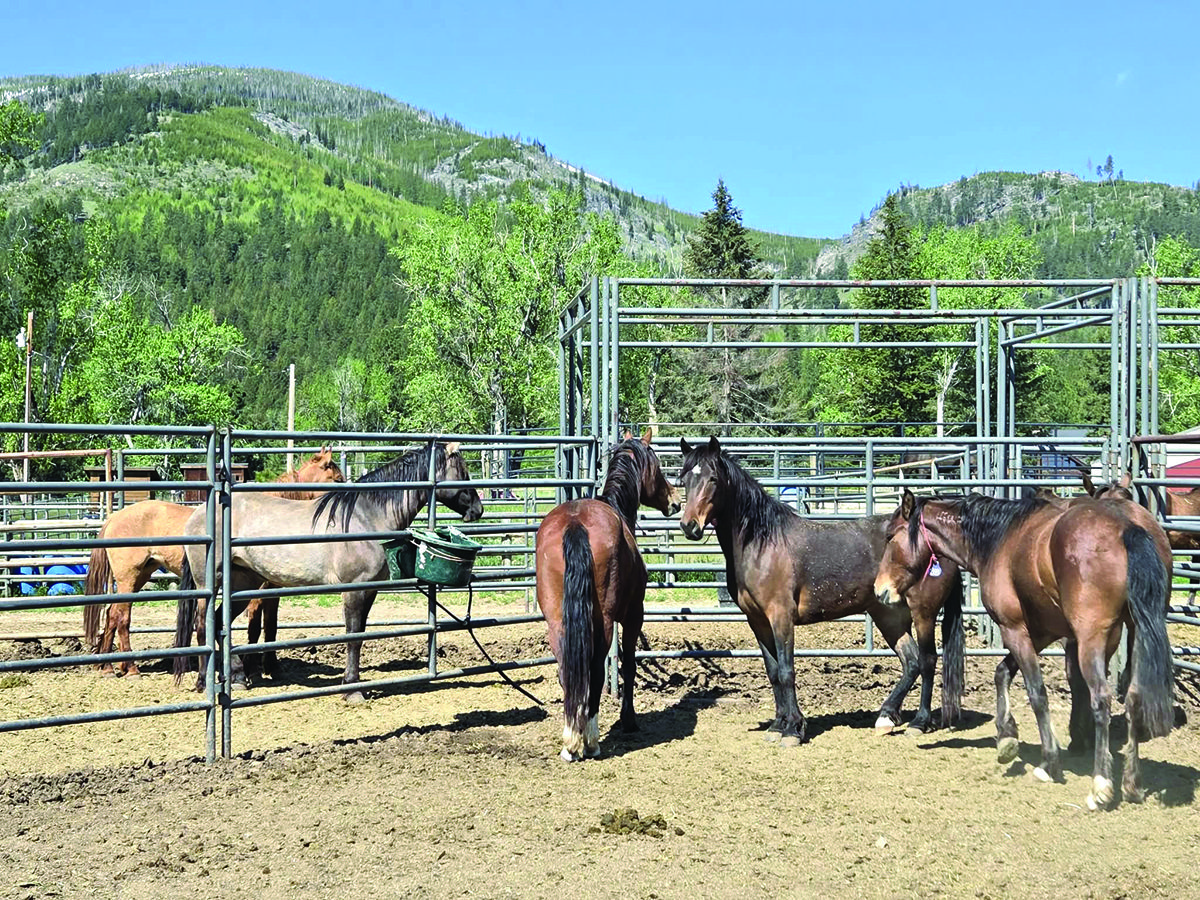
For the 2026 adoption cycle, Bischof has been hosting a series of adoption events at the Hamilton Training Facility since April. The final event will take place on May 23 between 9 a.m. and 4 p.m. It includes a “Next Steps Clinic” where he will coach new and potential owners on how to help their animals acclimate to their new lives. The instruction covers how to bridle the horses, lift their feet and safely load them into a trailer. After the final May event, people interested in the adoption process can meet Bischof by appointment. At the time of his interview on May 9, 12 horses remained out of a total of 33. Another shipment of horses may arrive later this summer, he said.
“My job is two things,” said Bischof, “I try to provide the public a place to adopt these horses from.” The trainer then gestured to the tan horse he had bridled and saddled in tow. “And then also, why I like to use my own horses, which this horse, [Sunny], was a wild horse, is that I like to use them all the time as ambassadors to show their trainability, that there is value in these horses and that if you put time into them, they can be really good, positive members of society. The other component of it that I really believe strongly in is I try to bring my experience of working with these animals for 15-plus years in the program and try to educate people so that they are successful with their new horse.”
Viewing the mustangs available for adoption, some timidly huddled together while others perked up their ears in clear curiosity. Even more grazed on hay without consideration for the humans observing them. Many wild horses and burros come from Nevada, Oregon, Wyoming and Arizona, each being a physical reflection of their historic roles in human industry in those areas. Sunny, Bischof’s horse, is from Oregon, where the animals were once used in mining and logging operations.
Sunny is now indistinguishable from a domesticated horse. Her “gentling process” started in September of last year, and already she is approachable and rideable. When the Wichs family arrived to collect their new colt at the May 9 event, Bischof used Sunny to “sort” the young mustang out from the rest of the group in its enclosure.
The horse recently acquired by the Wichs is the fourth animal they have adopted through the BLM program. The family members pointed out some of their distinguishing positive characteristics. Firstly, the burros the family adopted for packing aren’t scared of things like crossing creeks, they said. The animals don’t have to be trained to overcome those obstacles; they are sure-footed and not easily scared by things that can often frighten domestic packing animals. Wild horses and burros are also known for their genetically superior hoof health. Bischof added that burros also make great livestock guardians and that they have even been known to chase off coyotes and other large predatory animals.
Q Dehart, an Online Corral Specialist for the BLM Wild Horse and Burro Program, was also in attendance at the event to process adoption paperwork. She encouraged people interested in adopting an animal to go to the Online Corral website at wildhorsesonline.blm.gov and fill out an application. Once the document is approved, applicants can adopt wild horses and burros at events held by the BLM, its partners and holding facilities across the country.
The BLM requires that people meet certain criteria before taking in a wild horse or burro. There is a specific fence height requirement, and fences cannot be made of barbed wire or be electric, as wild animals have never been in contact with such materials. It is Dehart’s and Bischof’s hope that every horse and burro taken in through the BLM program has a chance to be adopted. Those that are not adopted retire on immense “off-range” pastures for the rest of their lives.
The horses currently available at the Hamilton Training Facility are $125 to adopt. Apart from his work with the BLM, Bischof hosts horse-training workshops and provides lessons. He also takes horses in for 30 to 90 days to train in various categories. For adoption or training inquiries, Bischof can be reached by phone at 406-880-2364.
Kim says
BLM does nothing but lie and mismanage Our Public Lands and Our Wild Horse and Burros. Horses that aren’t adopted end up in holding pens with no shelter, little water and feed and less vet care or in the slaughter pipeline. This article make is sound like it’s all roses and fairy dust for the horses which is far from the truth.
Aimee Romberger says
“Those that are not adopted retire on immense “off-range” pastures for the rest of their lives.”
You make it sound as if they have an idyllic life on grassy fields, when the reality is crowded pipe corrals and hay. I don’t trust the BLM as far as I could throw them. I’ve heard too, that people ARENT that checked before adopting, which is how SO many horses end up in the slaughter “pipeline”.
While I appreciate what you’re doing with regards to adoption, it doesn’t help enough horses (or burros). I’d like to see more prisons willing to have inmate programs- they benefit the horses and they have the power to rehabilitate even violent criminals. One would think that the powers that be would WANT that. But no.
BRIAND says
“Mustang Matt” where is your facility located? Rawlins, WY or Mt, where??? I would like to visit with your wild horses, bring them some apples and carrots…What is ya”ll address???
Roberta Powell says
Dear Matt:
Thank you for caring so deeply about our wild ones. Your patience and love can help these precious horses, donkeys and burros begin to trust again.
Please use your kind heart and infuence with the BLM to put an end to the cruel and brutal helicopter round-ups. Horse terrified and driven to exhaustion by low flying helicopters to holding pens is NOT how America’s legacy should be treated.
Hopefully, many of your wild ones will finf forever homes because of you and your excellent program!
Our 2 adopted Devils Garden horses from the Modoc National Forest are family and deeply loved.
Pease welcome one of America’s wild ones into your heart…you will save a life and enrich your own.
Many thanks!
Angela Jamison says
How much do the mustangs cost
Jorja neil says
I am retiring and will be moving near Rawlins,WY next summer
I will be very interested to meet with you once I get myself established there
Thank you for the fabulous work that you do