by John Dowd
More than 400 farmers, researchers and community members gathered at Montana State University’s (MSU) Western Agricultural Research Center (WARC) last week for the center’s annual Field Day, where scientists shared research aimed at helping growers improve yields, reduce costs and adapt to changing conditions.
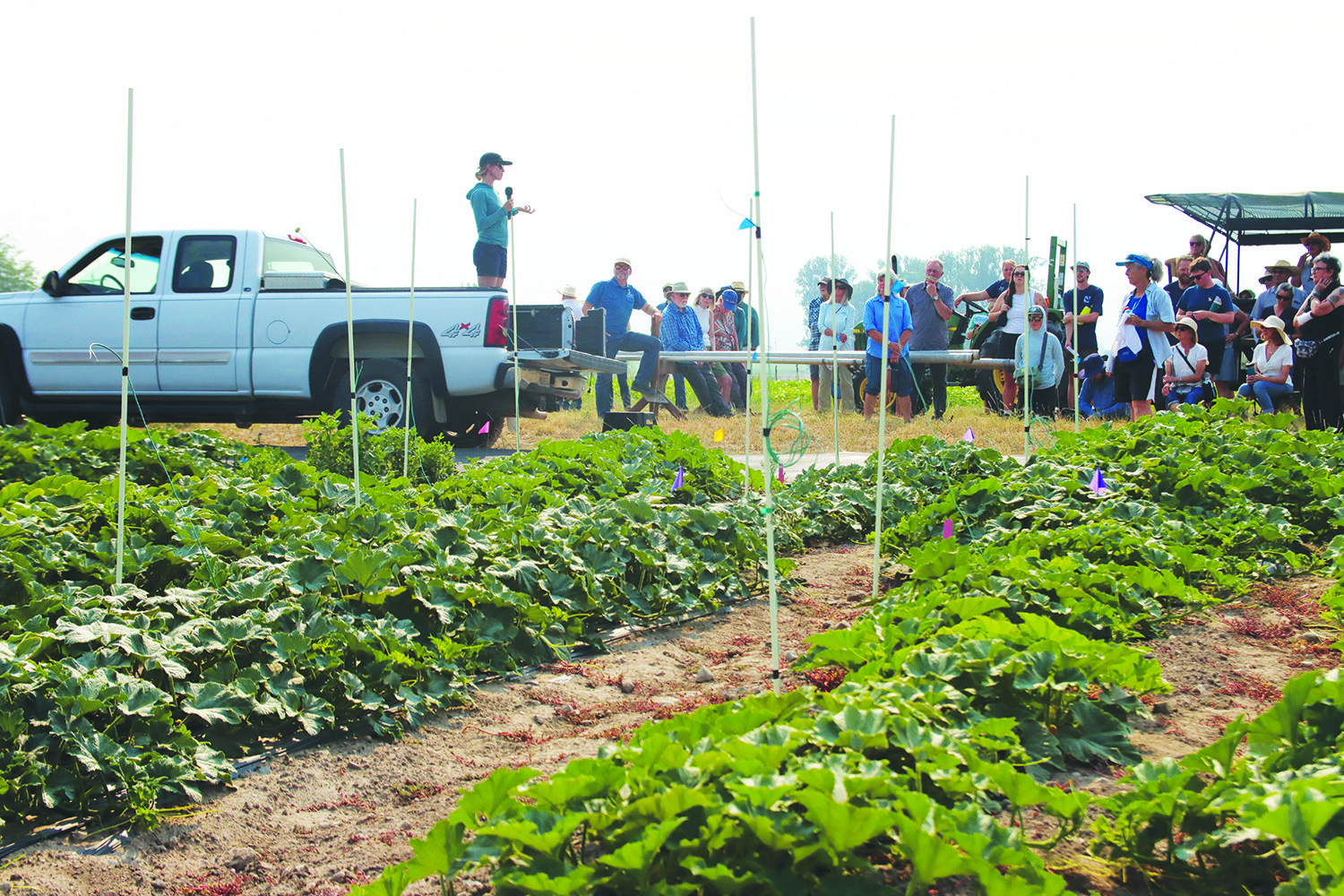
The event drew 425 RSVPs, making it one of the largest Field Days the center has hosted.
“The beautiful thing about this event is the networking,” said Kirsten Schmitt, administrative assistant at WARC. Large communal tables encourage visitors to mingle, creating a “chance to make new friends” among a “broad range of people,” she said.
The annual event gives growers a firsthand look at the center’s research, much of which spans several years and is designed to answer practical questions from Montana producers.
“We’re just trying to answer the questions that growers have,” Schmitt said.
As Montana State University’s only agricultural research center focused on horticulture and high-value specialty crops, WARC studies fruits, vegetables and organic production practices. Researchers test variables ranging from soil conditions and planting locations to harvest timing and consumer health benefits.
One of the center’s most prominent projects focuses on honeyberries, also known as haskaps, a cold-hardy fruit that has attracted increasing interest in recent years.
Schmitt said researchers are studying the berry’s potential health benefits, including its effects on the gut microbiome, while also evaluating production methods that could make the crop more profitable for growers.
This year, WARC also tested a new berry harvester purchased with grant funding, which Schmitt described as a “massive game changer for people who want to grow berries at scale.”
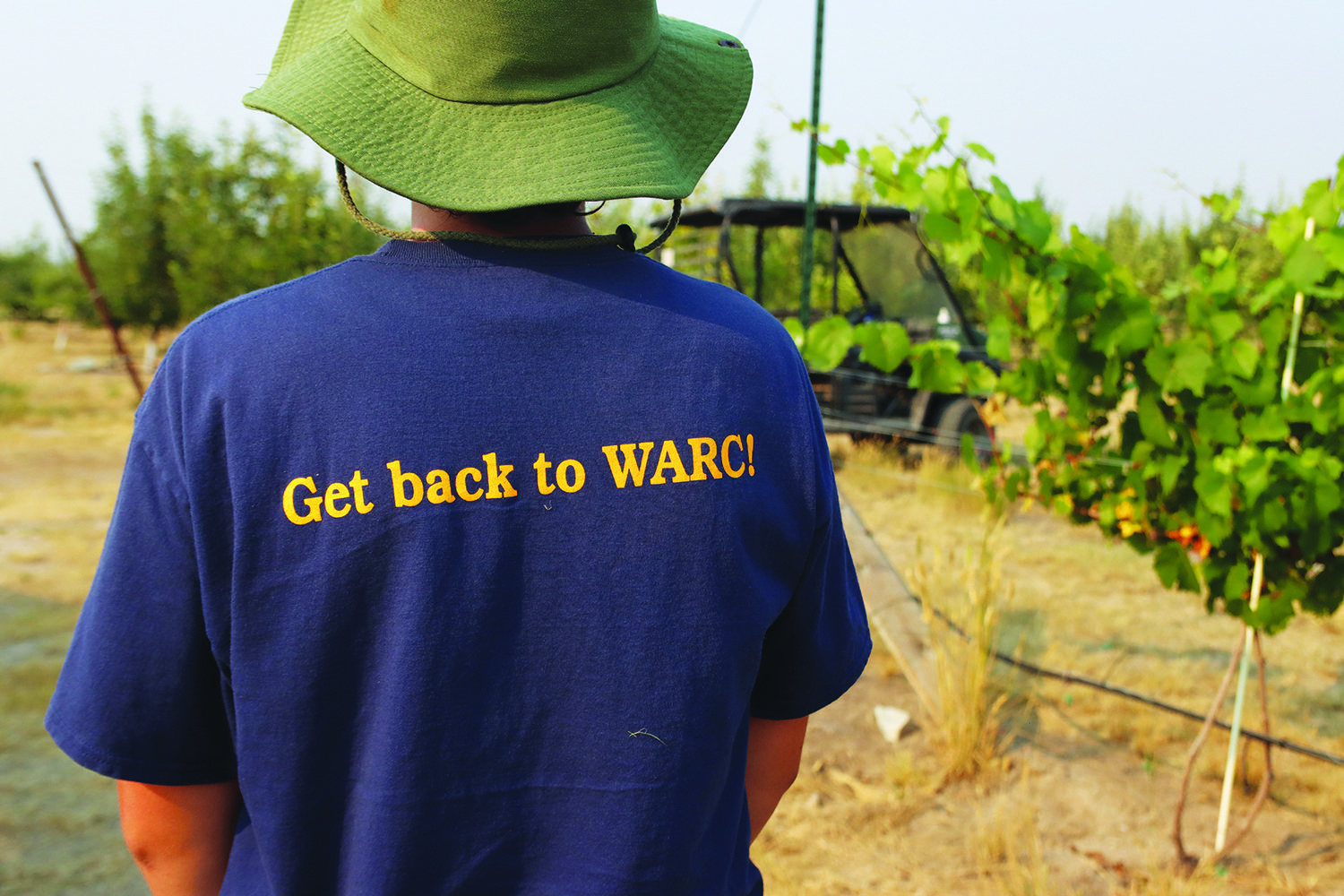
Although unusual weather reduced this year’s honeyberry yields, the plants continued to perform well compared to many other fruit crops that suffered from winter warmth followed by spring frosts. “I genuinely believe it’s the new superfood,” Schmitt said, adding that WARC is “pioneering the potential benefits of this fruit.”
She said the research center’s role is to experiment so commercial growers do not have to risk their livelihoods testing unproven methods themselves. “They don’t have time, energy or resources,” she said, to learn through costly trial and error.
Researchers are also responding to increasing demand for locally grown food. Schmitt highlighted the upcoming Grow Montana Coalition Governor’s Summit, scheduled for Oct. 23-24 in Helena, which aims to increase the share of locally produced food available to Montana consumers from about 3% today to 33%. She noted that roughly 70% of food consumed in Montana was locally produced in 1950.
She also pointed to WARC’s own efforts to support local agriculture, saying more food served at this year’s Field Day dinner came from local producers than ever before. “We wanted to highlight how awesome our local farmers are,” Schmitt said.
Many of this year’s research projects focused on improving efficiency while reducing costs for growers. Zach Miller, WARC superintendent, said the center’s work is driven by “farmer-driven questions,” including how to manage weeds without relying heavily on expensive inputs.
One project tested cover crops and a technique known as occultation, in which researchers cover soil with tarps early in the season. The tarps warm the soil, encouraging weeds to germinate before cutting off sunlight and killing them. As the weeds decompose, they return nutrients to the soil and support beneficial microbes. Miller said the approach prevented more than 90% of weeds in test plots while reducing labor costs.
Researchers are also evaluating nitrogen-fixing cover crops, including Austrian winter peas and hairy vetch, to improve soil fertility for organic vegetable production. “Organic fertilizer is expensive, and we can get plants to do that work in the off season,” Miller said.
After the event, Miller said he was encouraged by the turnout. “It was great to see all the folks coming out to support local agriculture and what we’re doing to support farmers,” he said.
For Dr. Jessica Torrion, superintendent of MSU’s Northwestern Agricultural Research Center, the value of Field Day lies in giving farmers information they can immediately apply.
She said producers are especially interested in practical technologies and techniques that can improve yields and efficiency. At her research center, scientists are working to develop a winter barley variety that can be harvested during traditional off-seasons, providing growers with additional flexibility.
Torrion said events like Field Day also strengthen relationships between researchers and agricultural communities.
Dr. Sreekala Bajwa, dean and director of MSU’s College of Agriculture, said the research centers play a critical role in “translating that research into practice.”
She said WARC is unique among MSU’s research centers because of its emphasis on specialty crops and value-added agriculture.
Rather than selling produce immediately after harvest, growers can increase profitability by turning crops into products such as jams or other processed foods, Bajwa said. WARC’s research supports production practices across the supply chain, from growing crops to developing higher-value products.
With another record turnout and research addressing everything from weed management to berry nutrition, Field Day reflected WARC’s mission of helping Montana growers make informed decisions backed by science rather than guesswork.