by Chuck Stranahan
With flyfishing there’s some stuff you need to learn hands-on.
With water rising everywhere and becoming unfishable, one of the best uses of your time off the water can be to practice the two skills you need most on the stream: casting and tying knots.
Casting practice has many benefits: It’s a good way to scratch the itch before the season gets rolling. Grooving your cast in beforehand can mean the difference between fish and no fish when you’re on the water. Besides, properly done, you’ll see rapid progress and it’s fun.
For a first session, take your fly rod outdoors and string it up. Let the experience, the sweet memories and anticipation soak in. Give it a couple easy casts to warm up. Then, go for a long one – sling it out there. Get it out of your system.
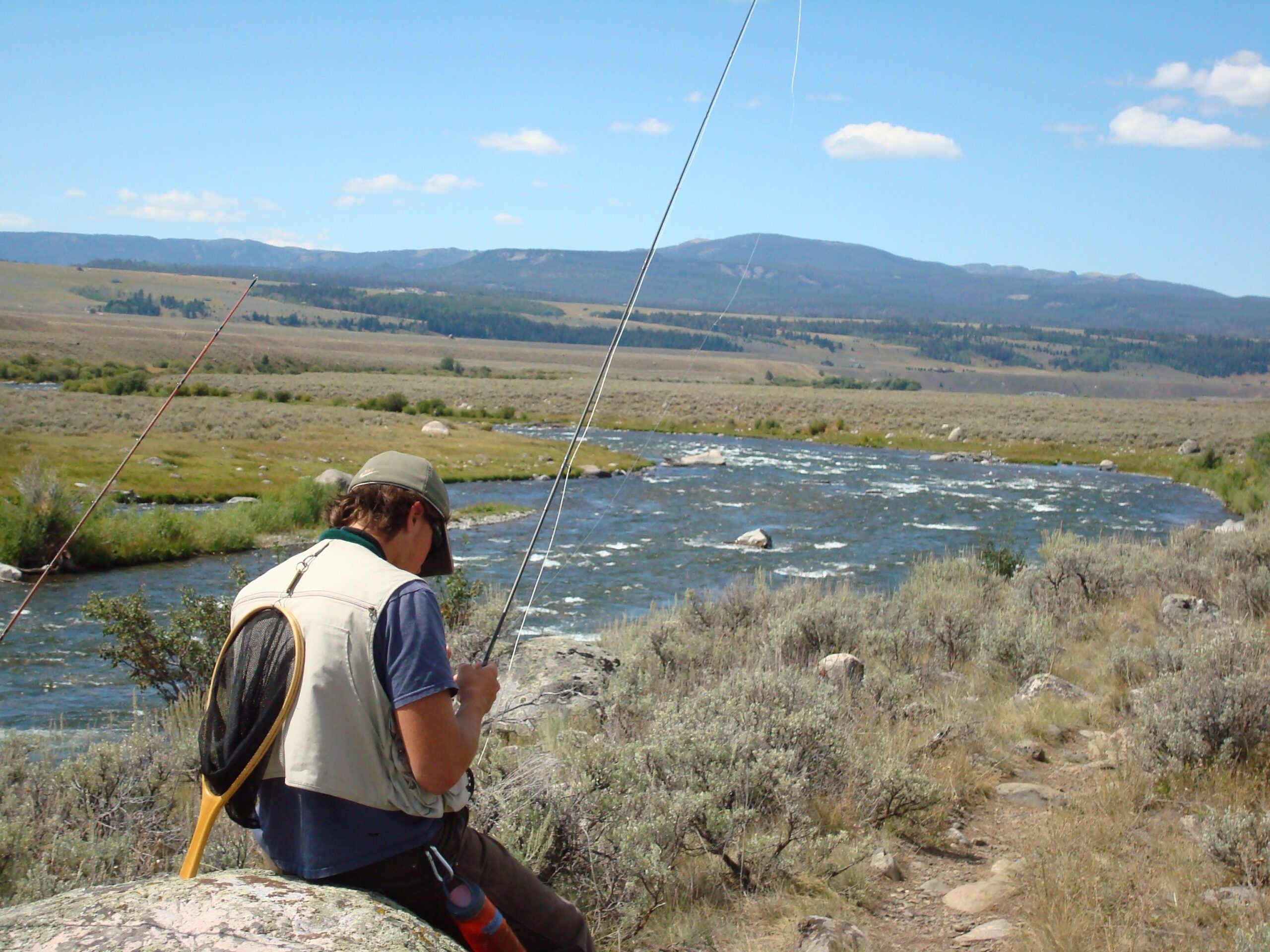
Time spent tying secure knots yields more trout, fewer breakoffs. Photo by Chuck Stranahan.
Limit those long ones to three casts, but don’t persist with it. Stop before you ingrain bad habits that need to be broken later, and pace off your best one.
Then put the rod away, go indoors and dial up some YouTube videos – good ones – on casting. The problem is there’s too much YouTube content out there – good and bad. How do you tell the difference?
Start by watching anything by Steve or Tim Rajeff, or the newer videos by Orvis. If you don’t mind older video quality, look up Doug Swisher’s casting videos. You’ll get good models to follow. Choose titles that match your experience. Try to memorize what they show you. Then, same day or next, go practice again.
Grab a couple of paper bags, put rocks in them and set them at 30 and 40 feet from where you’ll make your casts. Try to hit the near bag with the line tip first, and when that distance is easy, go to the further one. Practice for a smooth flow of line and accuracy.
After a few days of good practice, sling another long one. You’ll be surprised at the results.
Better still, get some lessons from a qualified instructor.
Another high water thing to practice is tying good knots. Sit in an easy chair, with a newspaper spread in your lap to catch the snippets and a good lamp shining bright over your shoulder. Have your clippers and a couple spools of tippet material, one heavy and one light, say, 3X and 5X at hand along with your fly box.
First, take a fairly big fly, say a #8, and some 3X leader material. Practice a knot called the improved clinch knot. You can find diagrams of that knot and others in books, product inserts that come with various pieces of tackle, and on YouTube. Ask Mother Google. She’ll know where to find it.
Follow the diagram or the video and practice the knot. Don’t quit practicing when you finally get it right. Tie it a dozen more times until you really get the hang of it. Then switch to a #14 fly and 5X tippet material. Still feeling smug? Keep going… the idea is to tie that knot in various sizes until you find it easy, routine.
Practice that improved clinch knot until you imagine yourself tying it perfectly and quickly in fading light with numbingly cold fingers while standing knee-deep in moving water that you can hear rushing over the midstream boulders, while a big trout is rising about forty feet away.
Then, learn the turle and Palomar knots. They’re fussier to learn but easier than the improved clinch once you know them, and they’re stronger. Another good knot to learn is the triple surgeon’s knot for tying two pieces of monofilament together – as in replacing tippet. You’ll use this knot about once for every three times you tie an improved clinch, and it is just as important.
Again, try YouTube and Google. The surgeon’s knot shown in videos is just a double overhand knot tied in overlapping pieces of material. To make it a triple surgeon’s knot add a third overhand knot to the loop. That makes it a triple surgeon’s knot. That third turn adds 50% to the bulk of the knot and increases its strength by about the same percentage.
Master those two knots – one to tie on your fly, and one to repair your leader. Secure knots will show in your catch rate when the water comes down.