by John Dowd
For many who visit Montana, elk are as good a symbol as any of the Rocky Mountains, just as the bison represent the plains. However, in much of the state, there was a time when we almost lost both. Many are familiar with the story of the bison, but not as many know the story of the elk, and the part the Bitterroot Valley played in the tale.
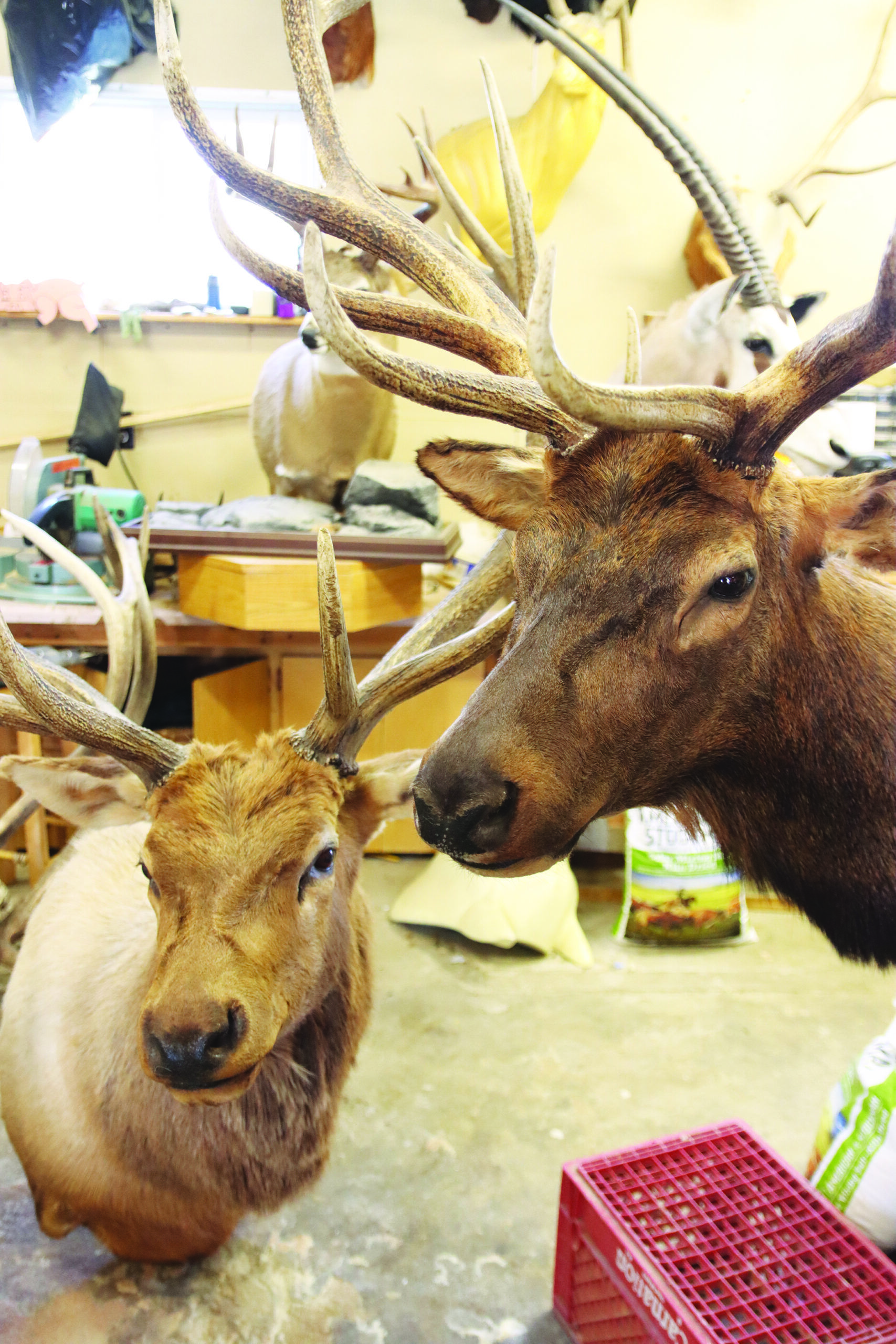
Two pieces of that history were just hung on the wall in the Hamilton Volunteer Fire Department last week, completing a long story of restoration and renovation.
On April 30, the two elk mounts that hung in the old fire hall were re-mounted in the new fire hall. These elk have been in the fire department’s possession for nearly as long as elk have been in the valley; in fact, exactly as long.
Kurt Kohn is a taxidermist in Hamilton who restored the two elk mounts. He is also a school counselor at Darby Schools and has a passion for history. He was first asked in the late ‘90s to work on the elk and went to appraise the process. He determined that there was no saving the original capes, as there was not enough left to salvage.
He redid the first elk and finally completed the second almost 30 years later. Part of the delay was finding good-sized, quality capes to match the original animals. The second elk was done using the cape from an elk his son shot in the Big Hole and donated to the process.
For Kohn, it was about “restoring Montana history,” and in fact, “the story is Bitterroot, but it is also a much bigger story than that.”
“Many take the elk for granted, like they have always been there,” said Kohn, but in reality, the elk were all but wiped out in the 1880s. Commercial hunting, a practice of no-limit harvesting for the sale of meat, hide, bone and antler for income, was the chief cause.
Fortunately, there were still a number of protected elk in Yellowstone National Park. These animals would then be used to repopulate much of the West, and the earliest attempts to do so took place in the Bitterroot Valley.
In March of 1912, an attempt was made to ferry 40 animals to somewhere near Hamilton by train car. According to an article written by Jim Harmon for the Missoula Current in 2021, the first shipment came from Gardner to Hamilton. During that shipment, huge crowds gathered, scaring the elk while they were on the train. Several elk were injured during that process as well as during the unloading. The shipment was considered a failure, and many of the animals were euthanized.
With lessons learned from the first attempt, the second attempt saw a plan change. The elk were shipped on an early train and released into an area near the Daly Stock Farm. The animals were placed in the special fenced-in area and allowed to acclimate before finally being released into the Sapphire Mountains, East of Hamilton.
That second shipment also carried 40 animals, including three five-point bulls and sixteen calves, with the rest being cows. No elk were injured in the second attempt. Fast forward to 2021, the population of Bitterroot elk was around 7,600, according to Montana Fish, Wildlife and Parks.
Those elk, among other later attempts at re-introduction, are likely the source of the majority of the elk in the western part of the state, as well as those that made it into Idaho and into parts of Canada.
But, the story of the Bitterroot elk does not stop there. According to what little information exists, the two bull elk of the Hamilton Volunteer Fire Department have been there since at least 1914.
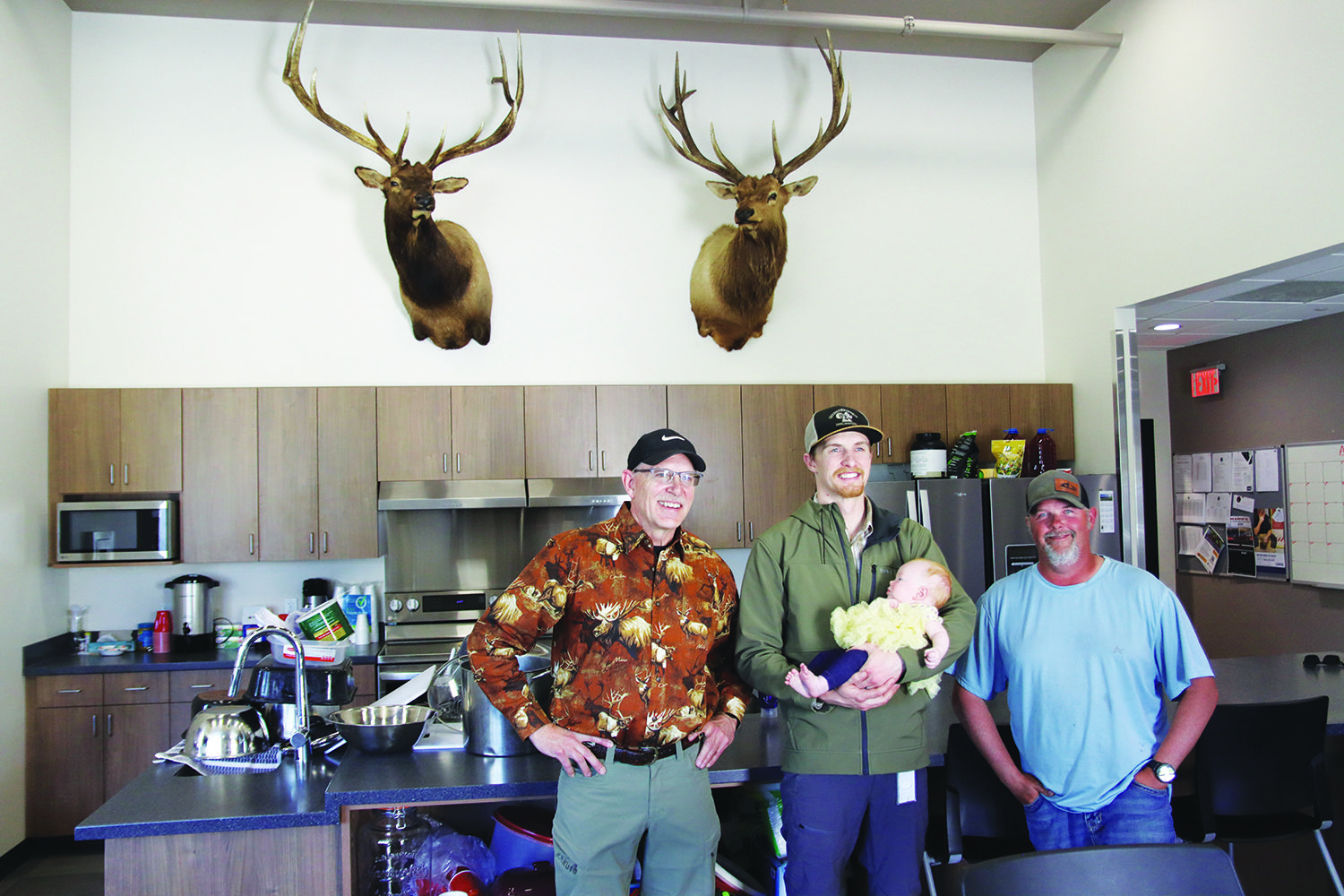
According to Kohn, who did some research when he learned about the true potential age of these two elk, one of the earliest possible accounts that can be verified comes from an elderly person who has since died. The person said he saw the elk there when he was a boy, in 1920, and that they had been there a long time. “So,” Kohn said, “we know that they were there in at least the ‘20s.” Many in the fire department believe they were there earlier than that, as early as 1914 or pre-WWI.
It is believed that the two elk hung in the firehall were part of that original herd; potentially two of the three original bulls from the first shipment were put down. “The timeline is too narrow to say they aren’t connected,” said Kohn. Otherwise, they could have been the calves or two of the three bulls in the second attempt. If this is true, it would mean they are the grandfathers of nearly every elk in the western part of the state and surrounding western states.
Whether they are from those original re-introductions or not, they are a part of the history of elk in the Bitterroot Valley and the overall story of the Rocky Mountain elk. Kohn said he is just “excited to see those elk up in the fire hall for the next 100 years.”
That pride is shared by Hamilton Volunteer Fire Captain Travis Walker. Walker helped take the elk down, which was a chore, as they were bolted onto the wall from the outside. According to Walker, all the firefighters are big hunters and love history. For them, “Those elk are part of our history, and a part of our passion.”
According to Walker, the fire department was founded in 1893, but did not get off the ground until around 1897. It is likely that those elk were added very early on in the life of the department, and at the time, the department would have been active and might have responded to the disaster of the first attempt to re-introduce elk into the valley. The real story may never be known.
Because they have been hung in their fire department for nearly as long as the fire department has existed, Walker and others believe it is almost an inseparable part of the fire hall culture. Recently, the department moved into a new building, and with “the new station, we needed new looking elk.” said Walker.
Kohn spoke on the process of restoring the historic elk mounts, saying that, in those days, these types of mounts were originally done as neck mounts. Shoulder mounts did not become popularized until the 1970s. He also had to contend with historic taxidermy techniques.
Kohn said he would not work on the original mounts without a hazmat suit, and discarded everything that was disintegrated and unsalvageable. The only original thing left from the over-a-century-old elk are the antlers.
Kohn’s concerns stemmed from the chemicals historic taxidermists used, which slowly poisoned them. Things such as arsenic and formaldehyde were common preservatives. At that time, Kohn said, taxidermists had a short lifespan.
These mounts were also assembled in the old way, put together using wood and nails. Today, forms are sculpted from foam, plaster and clay and can produce much more anatomically correct animals.
Also in those days, they used painted marbles for the eyes, which could only be so accurate and could not portray the same life. Now, taxidermists use special glass eyes that are almost indistinguishable from the real thing.
Kohn’s son, Kameron Kohn, along with Kurt and Walker, placed a written history of the elk on the back of the mounts, so that in 100 years, when they need to be refurbished again, the story of the two Hamilton Fire Hall elk will be told again.
Tracy says
Great story and glad to see the restoration. It is however, unlikely that they are of the first group “that were put down” since that was in March and the antlers would not have been near maturity as these are. Good to see none the less. There was a huge 8X8 stored in the Pony Barn near the Mansion Complex when I was a kid 60+ years ago. We knew the “Countess” quite well and she allowed us to hang out down there on occasion. A number of Marcus III trophies burned in the Carriage House fire that happened in either the late 60s or early 70s which was kind of Ironic. I dont think any of those Firemen are left that fought that one.