It’s been a balmy start to winter in Western Montana and neighboring states (Eastern Idaho, Northern Utah, and Western Wyoming). In addition to a few daily record highs, it’s been consistently much warmer than normal. The average temperatures for the months of November and December in 2025 were record highs in Missoula (77 years of data). The average temperature for December 2025 (34° F) was nearly 10 degrees higher than average (24.5° F) and only the second time in the last three quarters of a century that the average temperature was above freezing. In Hamilton, this December’s average temperature was also the highest (36.7° F) in the last 135 years and about 10 degrees warmer than average (27.4° F).
For most people, this warm weather has meant less snow to shovel and the rare opportunity to finish holiday shopping in shorts. Plants, however, may take this weather as a sign of spring and start to wake up before we’re done with winter cold.
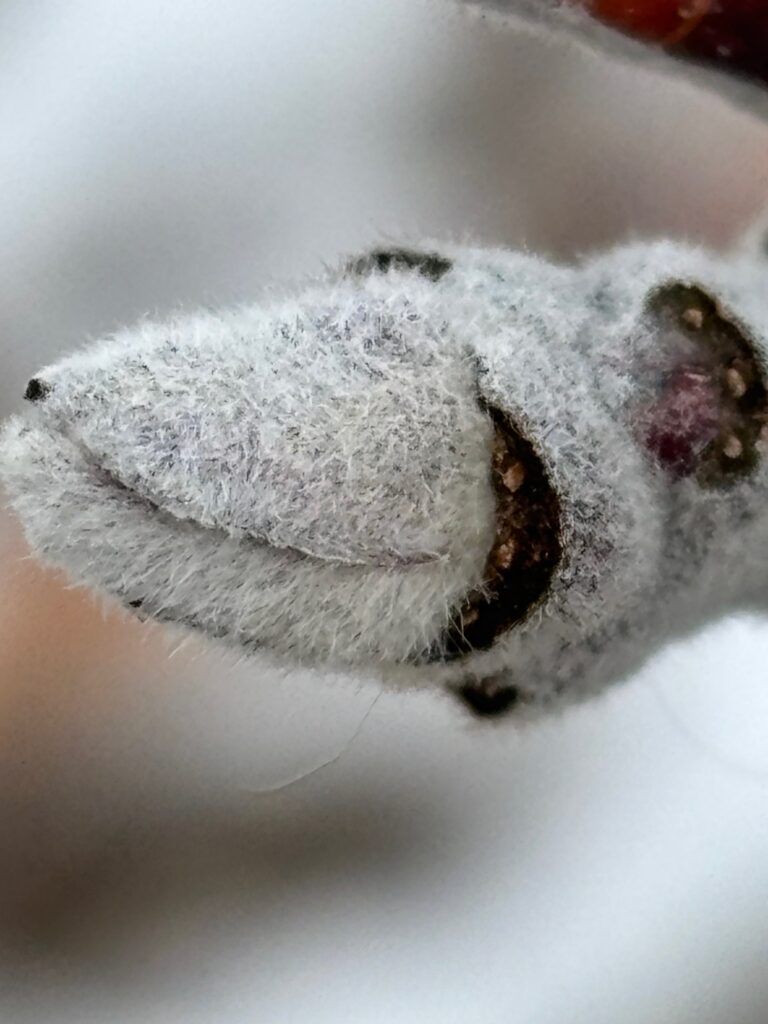
Apple bud. Photo credit: MSU-Western Agricultural Research Center, Corvallis.
Plants, especially trees and shrubs, lose their leaves and go dormant to survive the winter cold. When completely dormant, our hardy trees and shrubs can withstand below zero temperatures. But when they start to wake up and begin opening buds, that cold tolerance drops dramatically. For example, fully dormant hardy apple trees had little to no damage with the record lows (-35° F) we had in January of 2024. Yet, when buds begin to swell (called the silvertip stage), lows near zero can kill nearly all the flower buds and ruin that year’s apple crop. And once a plant starts waking up the process is not reversible.
Plants don’t have calendars, so they use temperature cues to get the timing right to come out of their winter sleep or dormancy after the threat of winter cold has passed. Once dormant, perennial plants track the time temperatures are above freezing and the degree (the number of degrees, literally) the temperature is above freezing. This integrated time and temperature is measured in degree days or growing degree days (GDD). Growing degree days are also used predict crop pest activity and proper spray timing (more information on GDD and fruit pest management). To avoid getting faked out by a warm fall, most perennial plants require an amount of time in cool temperatures (typically between 32- 45°F) before the plant begins to respond to warming temperatures. These chill and degree day requirements vary among plant species and varieties.
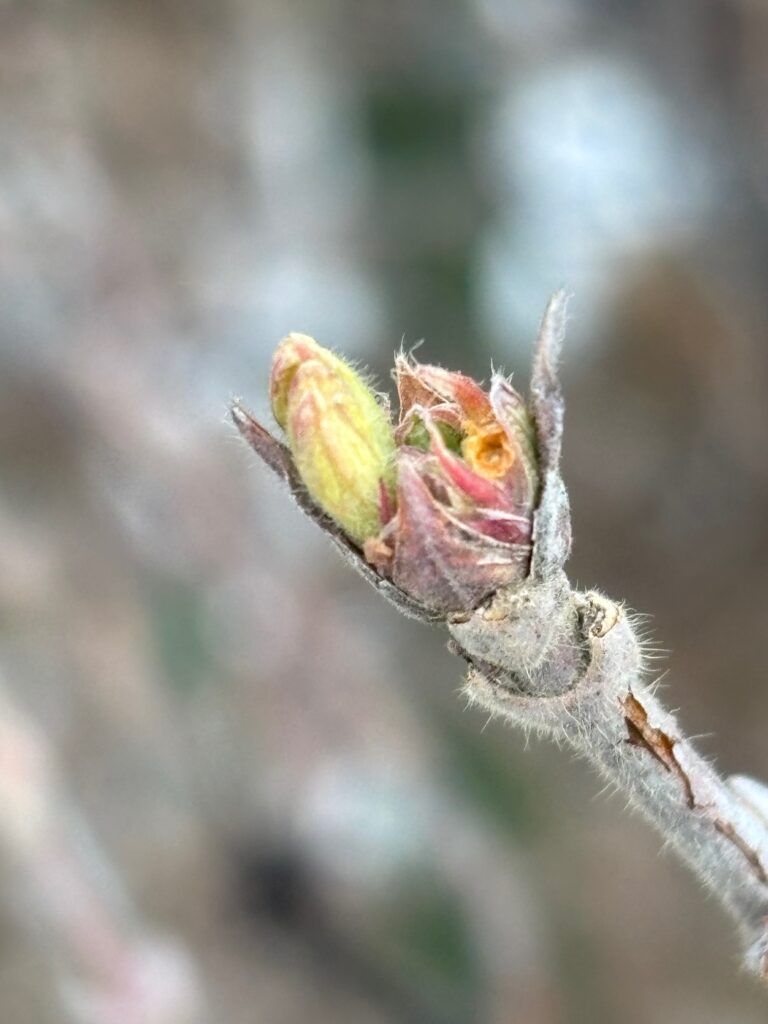
Honeyberry bud. Photo credit: MSU-Western Agricultural Research Center, Corvallis.
For plants with low chill requirements, this December’s warmth has sent the signal that it’s nearly spring. Based on the AgriMet Weather station at MSU-Western Agricultural Research Center, the accumulated warm temperatures of December 2025 were off the charts. It was the warmest December on record with just over 200 growing degree days (above 32°F), nearly three times the average (73 GDD) and nearly twice the previous record set in 2019. In a typical year, the Bitterroot Valley would not reach this level of accumulated heat until after mid-February and the risk of winter cold snaps have mostly passed.
As January arrives, buds are already starting to swell on the early varieties of honeyberries (AKA Haskaps) and other early blooming trees and shrubs like aspens, currants, lilacs, and crabapples.
Bitterroot plants emerged before Christmas this year. While Montana’s state flower is one of the first plants to emerge in the foothills, it typically comes up in late February or March. This early waking from winter dormancy can spell concern for these plants as we’ve only just begun the winter season and the potential for bitter cold temperatures is still very high. As trees and shrubs leave dormancy, their ability to withstand the cold declines quickly.
“The early winter warmth is unprecedented, or at least very rare since records started being kept in the late 1800’s. December of 1980 was nearly as warm and then you have to go back to before 1940 to find a few years that had comparably warm Decembers. It’s clear already that some trees and shrubs think that spring has arrived. That’s what the warm weather we had in December has signaled.”, says Dr. Zach Miller, professor at the MSU-Western Agricultural Research Center.
“Cold damage to those plants that are already breaking bud is almost certain. If we get more above freezing temperatures in January, other plants may start waking up and becoming more susceptible to cold injury. It’s going to be nervous winter for fruit growers,” said. “You may see less flowering and more winter injury in many other ornamental woody plants around your home and neighborhoods this spring.” In Utah, pear trees in Salt Lake City have already started to bloom.
Since 1907, MSU-Western Agricultural Research Center has been researching crops that grow in Montana and the region, specializing in high-value specialty crops, fruit and vegetable production, local food security and increasing sustainability and economic returns for small acreage operations. The station also conducts important research on row and forage crops, labor and labor efficiency, the complexity of the small business aspects of value-added products and start-to- finish operations. This information is distributed through MSU Extension, at conferences, workshops and by visiting the center in Corvallis. Every summer, MSU-WARC hosts the annual Field Day inviting the public to hear about the current research projects while enjoying a dinner with local ingredients.
Eliese Besemer says
What can we do to protect saplings and other young plants, or even younger but established trees?