by Michael Howell
A year ago, the University of Montana’s Flathead Lake Biological Station (FLBS) received a $6.6 million grant from the Environmental Protection Agency (EPA) Columbia River Basin Restoration Program to develop and implement a comprehensive and collaborative Pesticide Stewardship Partnership Program (PSPP) for the Upper Columbia River Basin of Montana.
Pesticide is an umbrella term for substances that prevent, kill, repel or mitigate organisms that are harmful to cultivated plants or animals. They often target insects (insecticides), but also include those that target plants (herbicides), fungi (fungicides), and even rodents (rodenticides).
The five-year long grant project aims to reduce pollution in Montana’s waterways primarily by engaging and educating the public in ways to reduce the toxic contaminants into our streams and rivers through proper use of pesticides. Some of the planned activities include increased residential and commercial pesticide waste collections and educational watershed tours.
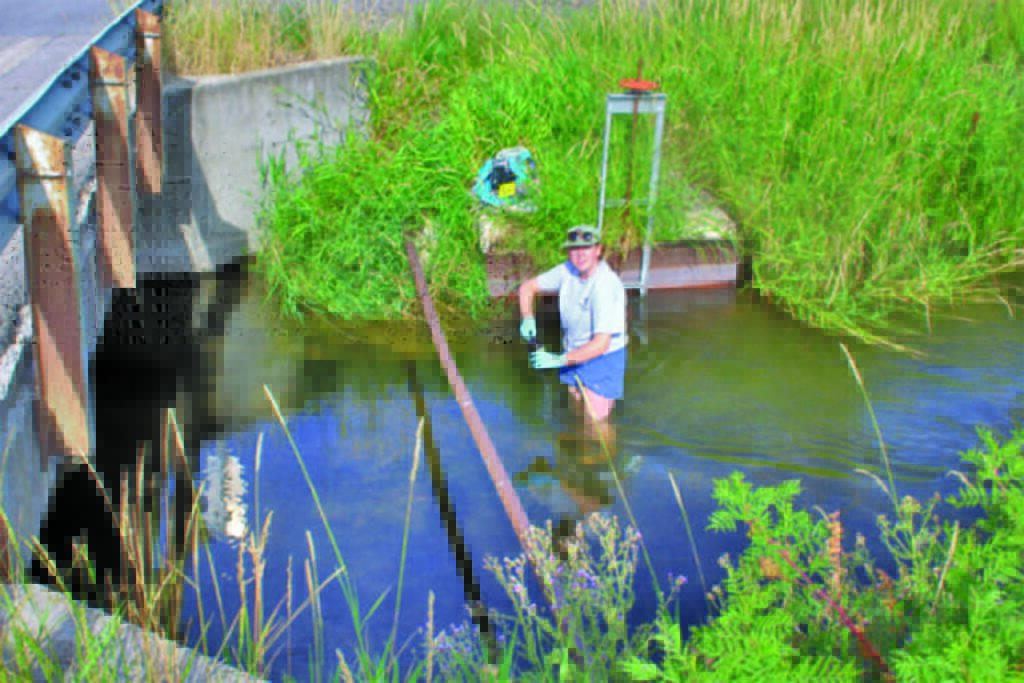
Big Sky Watershed Corps member Chloe Czachor, who is leading the field work in the pesticide monitoring project, was in the Bitterroot last week visiting eleven different sites from Florence to Hamilton checking physical parameters of the water and grabbing water samples for lab analysis. Photo by Michael Howell.
To help out with these educational efforts, Montana Department of Environmental Quality is developing its own initiative to encourage people to build native-plant buffers between lawns and streams, so if they insist on using pesticides, there is less of a chance for it to drain directly into streams.
In addition to the educational efforts, the grant is also funding eight sub-award recipients who will be carrying out other projects that address various EPA priorities, such as green infrastructure and agricultural best-practices.
The city of Missoula is one of the sub-award partners that will address green infrastructure by creating urban wetland areas that will receive city stormwater and filter it naturally before it ends up in the Clark Fork River.
Another sub-award recipient, the Confederated Salish and Kootenai Tribes, are doing fish tissue studies that could lead to development of fish consumption guidelines related to pesticides similar to what Montana Fish, Wildlife and Parks has already published related to other pollutants such as PCBs and Dioxin-Furans.
Aside from these educational efforts and sub-award projects, the grant is primarily funding an unprecedented effort at documenting the extent and degree of current pesticide contamination in Western Montana. Prior to this project there has been no comprehensive pesticides monitoring program in Western Montana.
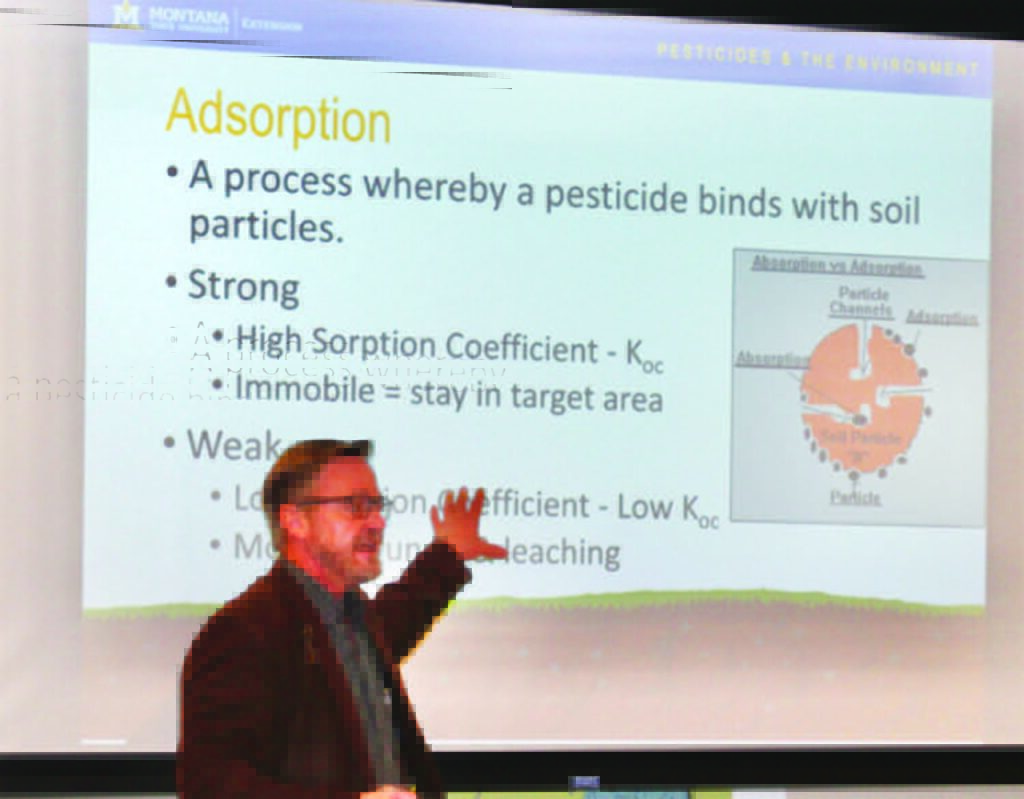
At the forefront in educational efforts on pesticides is Dr. Cecil Tharp, the MSU Extension Pesticide Education Specialist since 2004. Tharp holds degrees in the fields of wildlife biology, entomology and parks and recreation and works with 56 county and tribal MSU Extension Agents and is dedicated to the certification and training of private applicators while assisting general and commercial pesticide applicators. Photo by Michael Howell.
The University of Montana was the primary grant recipient and Dr. Rachel Malison, assistant research professor at FLBS, is overseeing implementation of the grant. She and her team at FLBS, along with a plethora of stakeholders including non-profits like the Bitterroot River Protection Association, county conservation districts and weed districts, the agricultural research center at Montana State University, other state and federal agencies, and concerned citizens, spent the first year developing a plan for implementing a baseline pesticide monitoring project encompassing 12 counties in Western Montana.

Spearheading the pesticide monitoring efforts is Dr. Rachel Malison an Assistant Research Professor at Flathead Lake Biological Lab and in the Ecology & Evolution Program at UM. She also developed and runs FLBS’s Monitoring Montana Waters program, which supports water quality monitoring efforts in Montana by providing scientific, technical and financial support to citizen-science watershed groups. MMW offers assistance and support in designing monitoring plans, selecting analytes for analysis, and providing on the ground training in methodologies. For further information visit the Monitoring Montana Waters page under Outreach or email mmw@flbs.umt.edu. Photo courtesy of FLBS.
“This funding enables us to build a network of stakeholders to implement projects on the landscape and better protect our waters,” said Malison. “We look forward to developing a set of resources that can be used by all – from residential users to producers – that will help us reduce the impact of pesticides on our waters and aquatic communities that live in them. We also hope that this program will set the stage for further work on toxins reduction throughout the entire state of Montana.”
The Quality Assurance Project Plan (QAPP), which was required before any field work could begin, was finally approved in April of this year. It outlines all the procedures and protocols for the project in detail. The laboratory will be analyzing for 103 different chemical compounds found in the pesticides, insecticides, herbicides, fungicides and rodenticides that are most commonly in use.
Determining the number and location of sites and timing of the monitoring efforts that could be conducted within the budget constraints was a herculean task and the lab’s GIS specialist, Diane Whited, played a key role. The sites were selected and organized according to land use, including forest sites that are used for grazing and timber production; urban sites categorized into high, medium and low risk of contamination; agricultural sites; and discreet sites, such as airports, golf courses and parks that may present higher risks. The timing was also analyzed in terms of the seasonality of pesticide application since various pesticides are applied at different times on different crops.
Now that the QAPP has been adopted, the boots have finally hit the ground. Or should we say the sandals have hit the streambed? Big Sky Watershed Corps member Chloe Czachor, who is doing the field work, was in the Bitterroot last week visiting 11 different sites from Florence to Hamilton, checking physical parameters of the water and grabbing water samples for lab analysis.
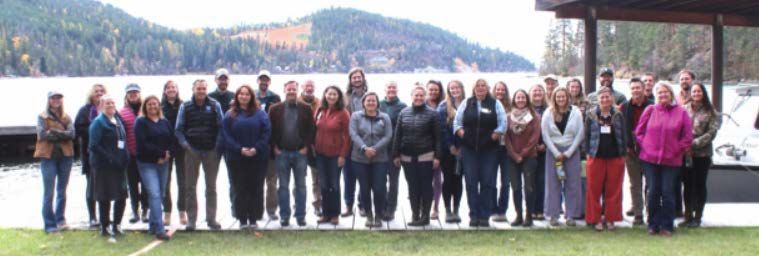
Dr. Rachel Malison and her team at the Flathead Lake Biological Lab along with a plethora of stakeholders including non-profits like the Bitterroot River Protection Association, county conservation districts and weed districts, the agricultural research center at Montana State University, other state and federal agencies, and concerned citizens, spent the first year developing a plan for implementing a baseline pesticide monitoring project encompassing 12 counties in Western Montana. Photo by Michael Howell.
“It’s been really cool to be a part of something so new and so important,” said Czachor. “It’s been a massive effort and not a lot of people can say that they’ve been involved in the beginning of a program like this, especially something on this scale.” She said that she was grateful for the trust that has been placed in her in doing the main field work for the project.
“It’s been a great way to see Montana too, up and down mountain ranges, through national forests, it’s a great way to see Montana.” She said this was her first year living in Montana and she was very impressed by what she has seen, especially in the water quality at Flathead Lake, for instance.
“I’m from Madison, Wisconsin,” said Czachor, “and we have some great lakes and I have seen the changes since my childhood in the water, the degradation of water quality and clarity, the emergence of many more toxic algae blooms in the summer, the increasing water temperatures, the huge changes in the ecological communities in the lakes. It’s cool to see a place that is not yet experiencing the same sort of impacts to such a degree.”