by Scott Sacry
Walk out the front door of Chapter One Book Store in downtown Hamilton and turn west toward Bell-McCall and look around – you are surrounded by ghosts. This was Hamilton’s historic Red Light District, called the Pinckney District.
These Pinckney District ghosts are ghosts of bars, brothels, fires, and decency walls. They are the ghosts of the piano players, bartenders, madams, prostitutes, gamblers, entrepreneurs, capitalists, the up and coming, and the down and out.
These ghosts were made real to a group of lucky locals during the inaugural Red Light District walking tour in downtown Hamilton on May 14, organized by the Ravalli County Museum.
The Museum introduced the new walking tour as a way to celebrate the National Historic Preservation Month of May. The tour highlights the Red Light District and other restricted districts of historic Hamilton. The tour is one of imagination as most of the original buildings from the era no longer stand.
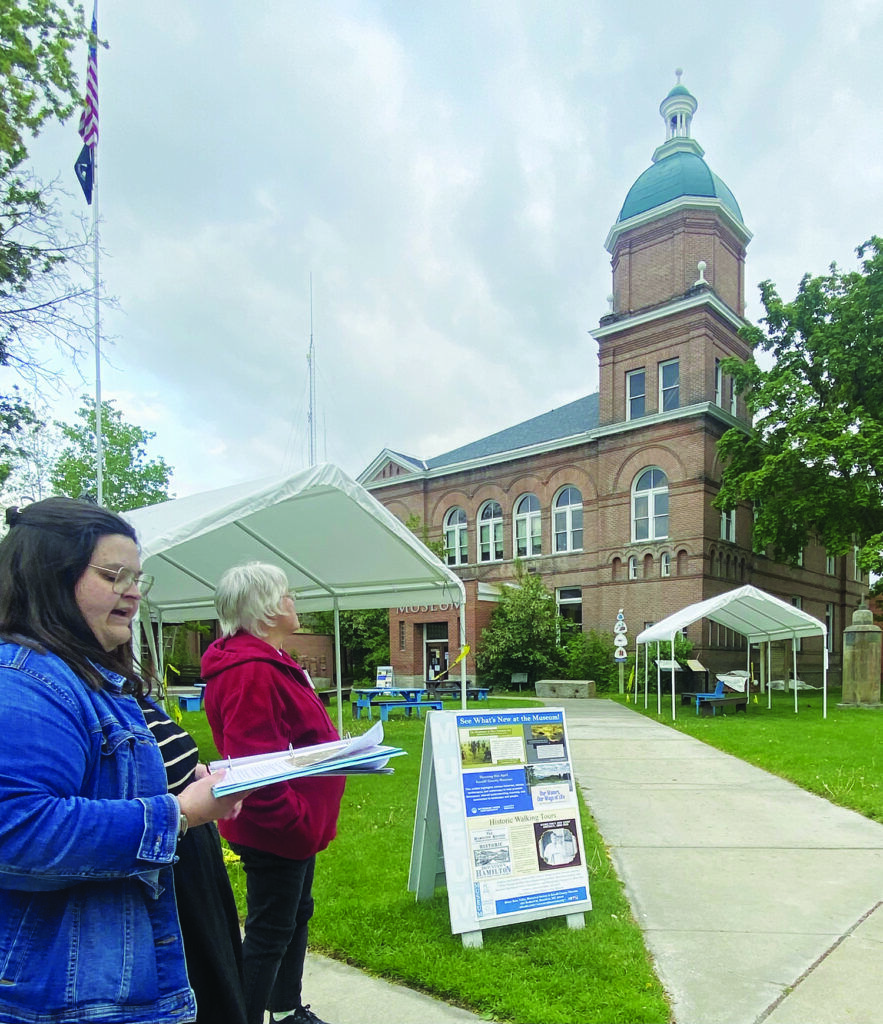
Historian Sophia Etier, left, leads the inaugural Red Light District walking tour in downtown Hamilton on May 14, organized by the Ravalli County Museum. Photo by Scott Sacry.
In the historical preservation world, Red Light Districts are referred to mainly as “Restricted Districts.” These districts not only held bars and brothels but housed minorities and other disadvantaged groups.
Historian Sophia Etier was the tour guide. She created the content for the tour from her Master’s thesis research on the subject. The tour consisted of 10 stops in downtown Hamilton, and started and ended at the Ravalli Country Museum. The tour went up and down Main Street and the group learned about a Hamilton that would be lost to time, save for those, like Etier, who help preserve its memory.
Model Cafe
The tour started at 127 West Main Street, where the Bitterroot Performing Arts Center offices are now located. This was once the location of the Model Cafe, which was open 24 hours a day, owned initially by Chinese immigrant Charles A Foy, then by the Japanese family Mihara who owned it up until 1941. “Frank Mihara and his wife Yukiyo were forced to close the cafe in 1942,” said Etier, “after a significant loss of business due to racial prejudices and patriotic propaganda at the time.”
The Montana Cafe
The next stop was in front of Ford’s Department Store, the east side of which was once the old Montana Cafe. Started in 1893 by Chinese immigrant Lee Doon, the Montana Cafe was a Chinese restaurant for nearly 100 years until it closed in 1983. “Jim and Harry Hom erected the Montana Cafe’s famous sign on the outside of the building in 1943,” said Etier, “marking the first use of neon signage in Hamilton.” The neon sign was memorialized on the cover of Hank William Jr.’s 1986 “Montana Cafe” album.

The Montana Cafe neon sign at 134 West Main Street was the first neon sign in Hamilton in 1943. The sign was memorialized on the cover of Hank William Jr.’s 1986 “Montana Cafe” album. Photo courtesy of the Ravalli County Museum.
Pinckney District
As referenced above, the block where Bell-McCall and the USPS building currently stand used to house the Pinckney District, the original Red Light District of Hamilton, which held the majority of the city’s brothels. For fans of walls, there was a “wall of decency” surrounding the district to spare innocent eyes from viewing. “The district thrived until 1908 when an early morning blaze swept through the wood frame houses,” said Etier.
Aunt Tish’s Place
One of the most illuminating stops on the tour was at 109 North 4th Street (currently the Westmont Plaza) or “Aunt Tish’s Place.” Aunt Tish was born to an enslaved mother in Missouri in 1862. She made her way to Hamilton in 1899 and purchased an old brothel building which she converted into a boarding house and restaurant.
The establishment became famous because of Aunt Tish’s southern hospitality and Sunday chicken dinners that attracted people from all over the world. But Aunt Tish is best known to locals for the love she gave back to the community. “She housed underserved youth in her home and provided countless local children with the ability to gain an education,” said Etier. “At the time of her death it is believed that she had done more than any other Hamiltonian to assist the disadvantaged and underprivileged.”
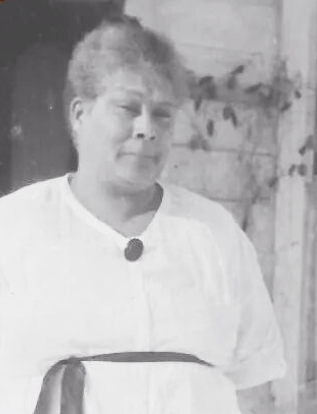
“Aunt Tish” ran a world famous boarding house and restaurant at 109 North 4th Street (currently the Westmont Plaza). Photo courtesy of the Ravalli County Museum.
This is just a small taste of the information to be had from this tour. To learn more about the Hamilton Downtown walking tours, contact the Ravalli County Museum at (406) 363-3338 or email Michelle Nowling, the Executive Director of the Museum at director@ravallimuseum.org.
beth handley says
For a lovely quick easy read
High Lights, Low Lights, and Red Lights by Dr L Allen Strate. Goes in depth of Hamilton’s Red light district.