Scientists explore tick salivary glands as tool to study virus transmission and infection
Research into ticks in the Bitterroot valley began in earnest around 1900 when Dr. Howard Ricketts began looking into the causes of Rocky Mountain Spotted Fever. The Bitterroot is now home to one of the National Institutes of Allergy and Infectious Diseases’ (NIAID) most advanced Bio-Level 4 research facilities and continues to make advances in the study of tick-borne infectious diseases.
Scientists at Rocky Mountain Laboratories have recently published research results indicating that the salivary glands of some tick species could become important research tools for studying how viruses are transmitted from ticks to mammals, and for developing preventive medical countermeasures.
Tick salivary glands usually block transmission, but the new study, published in the journal mBio, focuses on the role of salivary glands in spreading flaviviruses from black-legged ticks (Ixodes scapularis) to mammals. Lead author in the study, Dr. Jeff Grabowski, advances his research work published in 2017 that established cultured tick organs as a model for flavivirus infection.
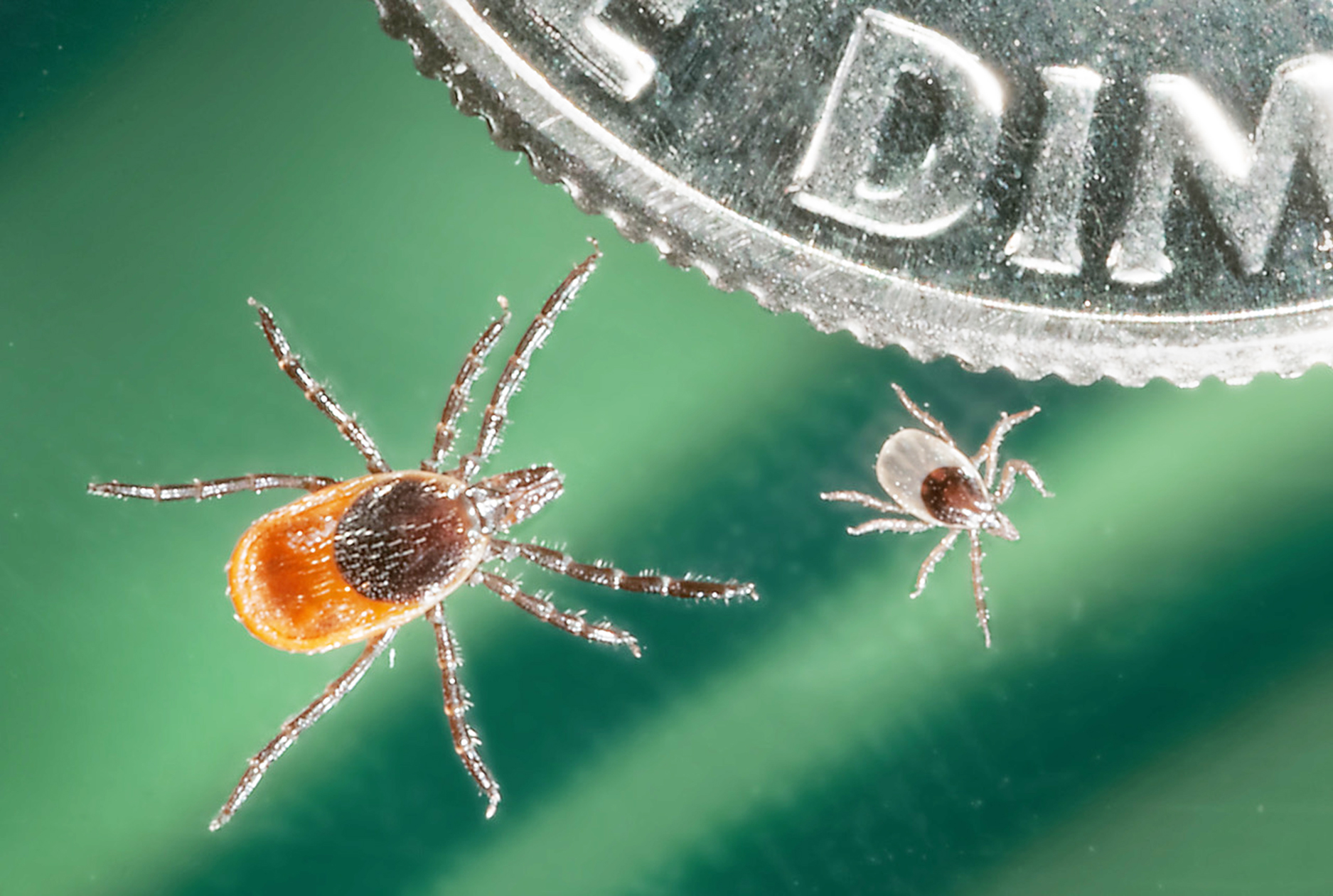
According to Dr. Marshall Bloom M.D., chief of NIAID’s Biology of Vector-Borne Viruses Section at the lab, Dr. Grabowski and his team developed a method of dissecting these very small ticks, about the size of a mustard seed, and separating out the midgut and salivary glands. This enabled them to grow them in an incubator as cultures which could be used for experimental purposes.
“This latest study is an important extension of that early work,” said Bloom. By inoculating the cultures with an infection, the scientists could study the process of transmission. In this case the transmission of a highly infectious flavivirus.
Flaviviruses include Dengue virus, Zika virus, West Nile virus, Yellow Fever virus, Powassan virus and several other viruses. Powassan is the only endemic flavivirus spread by ticks in North America, where it is considered a re-emerging virus. According to Bloom, Centers for Disease Control statistics show that the numbers of infected people are increasing, and the tick’s range is also increasing.
Physicians in the United States have reported roughly 100 cases of disease in the past decade, half of them in 2016-17. Powassan virus disease occurs primarily in northeastern states and the Great Lakes region. Bloom was quick to add that this tick has never been identified in Montana and this type of tick-borne infection has never been identified in the state either.
Symptoms of Powassan virus disease can include fever, headache, vomiting, weakness, confusion, loss of coordination, speech difficulties, and seizures. If the virus infects the central nervous system, it can cause brain inflammation and meningitis. Debilitating long-term neurological problems or even death may occur.
Though disease caused by Powassan virus is rare—most people who become infected with Powassan virus do not develop any symptoms—the virus can be transmitted very rapidly. Within 15 minutes, an infected tick can transmit the virus to a person or other mammal on which it is feeding.
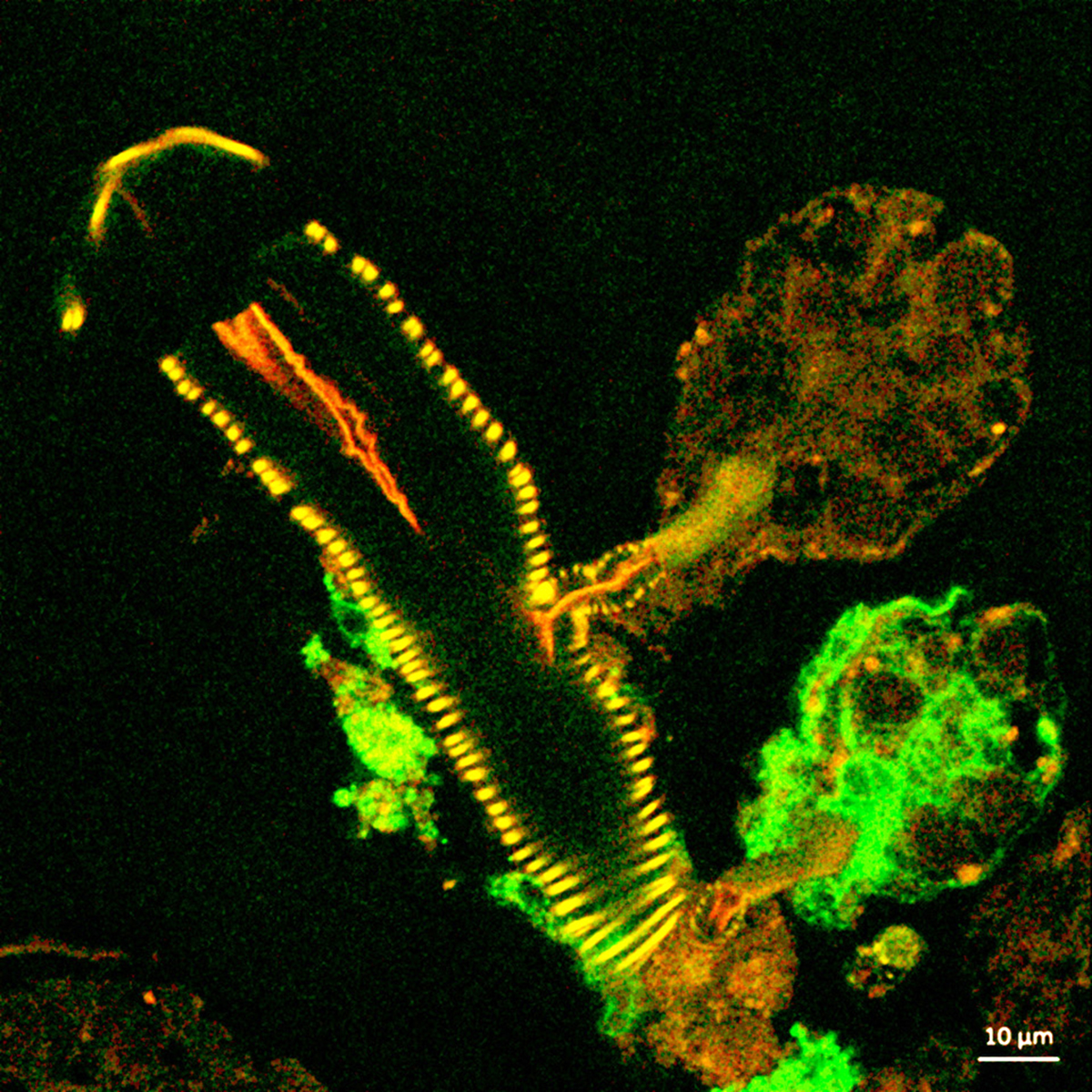
In examining the molecular interactions between black-legged ticks and mammals, the NIAID scientists have learned that flaviviruses reproduce in specific locations in tick salivary gland cultures (see photo). Bloom said this could explain why virus transmission occurs so quickly, because the virus is already fully formed in the tick’s salivary gland and ready to infect when the tick bites.
Bloom also noted that in the picture we can see that one salivary gland shows signs of high infection, another nearby salivary gland shows no infection at all. This may indicate that the virus targets certain glands (acini) and maybe even targets certain of the two dozen or so cells contained in each acini.
“This could allow us to determine what is unique in these that makes them susceptible to the virus,” he said. Another important thing that Grabowski has done, according to Bloom, is develop a technique which is able to knock out the expression of a specific gene in the cells.
“He knocks out a gene in the salivary gland and it shows a reduced ability to grow the virus,” said Bloom. He called it a “gateway observation” and taken together, these findings help identify transmission pathways that potentially could be blocked with a countermeasure. The group also is assessing how viruses grow in cells of the cultured tick midgut to help identify different viruses that can grow in black-legged ticks.